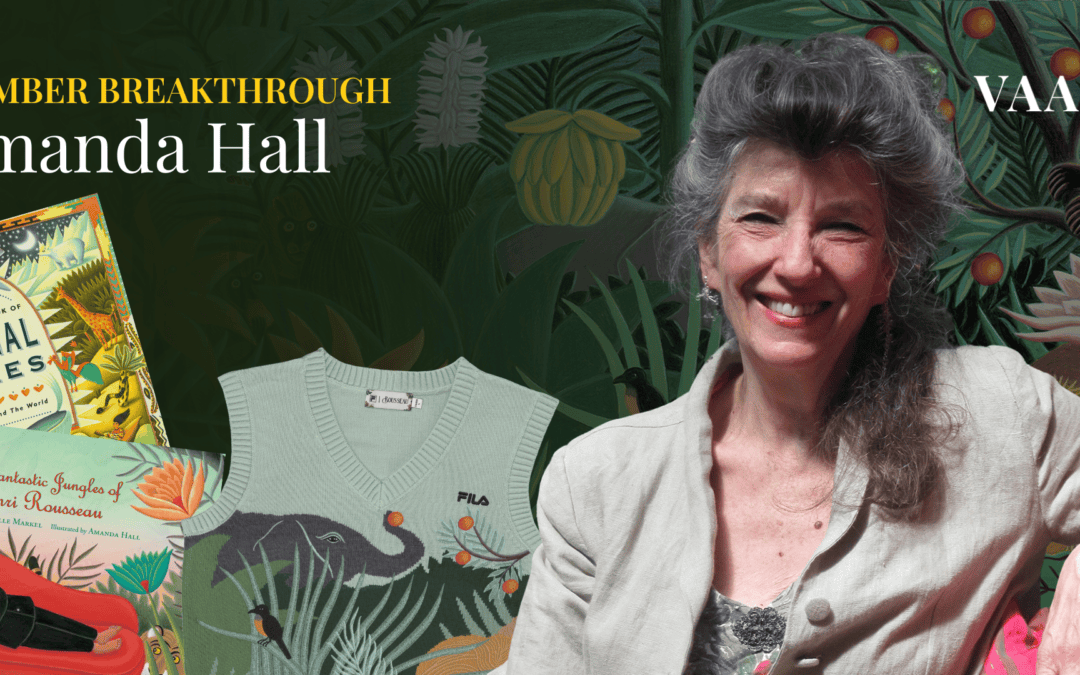
Award-winning illustrator Amanda Hall reflects on a career spanning more than 50 published books, international publishing and commercial licensing.
Amanda Hall’s richly coloured, decorative illustrations have introduced generations of readers to stories, cultures and imagined worlds.
Her work has been published by Barefoot Books, Templar, Pavilion, DK, Lion Hudson and Frances Lincoln, as well as US publishers Eerdmans, Balzer & Bray, an imprint of HarperCollins Publishers, and Wisdom Tales.
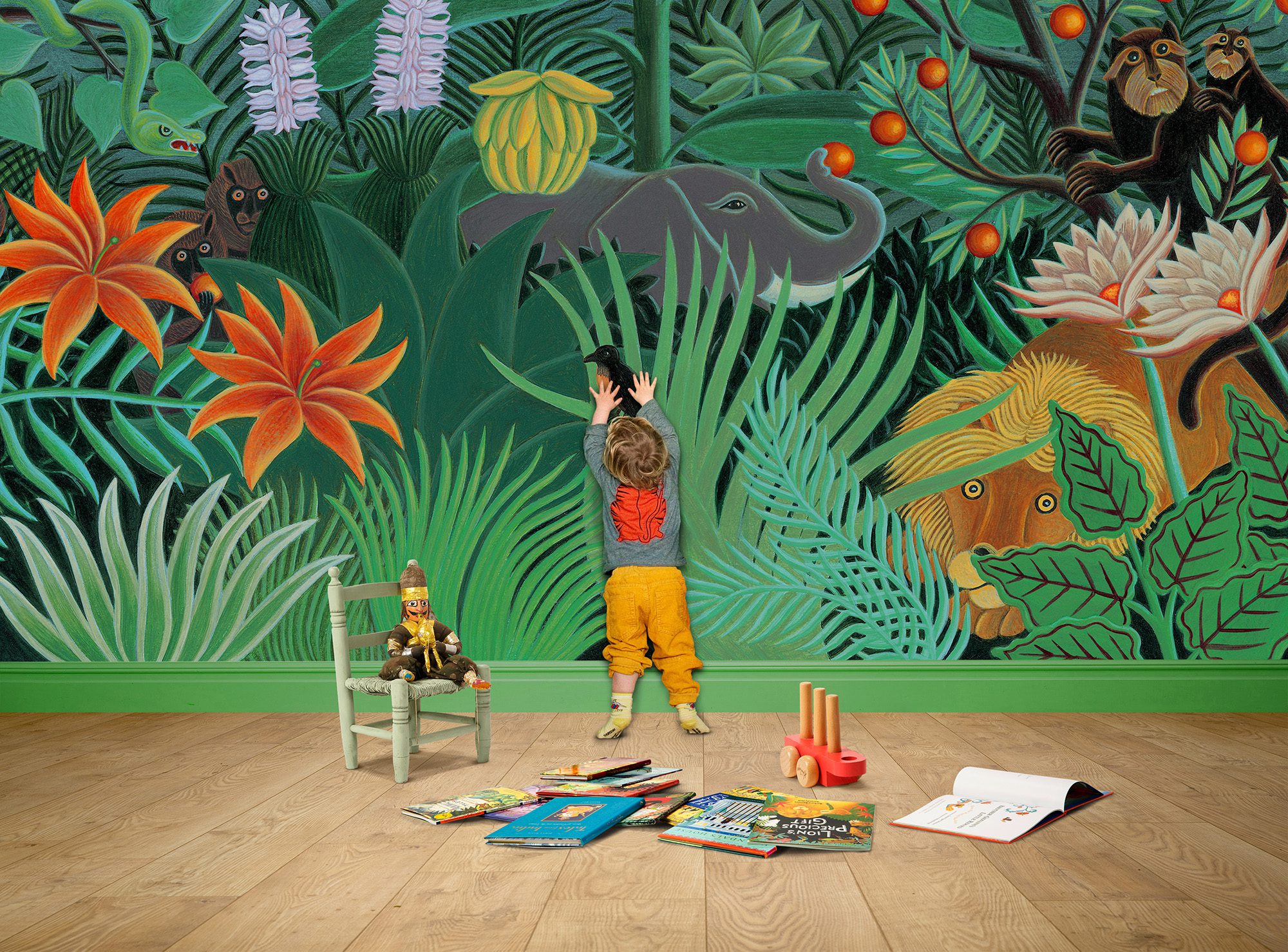
The Fantastic Jungles of Henri Rousseau, written by Michelle Markel and illustrated by Amanda, was shortlisted for the 2013 PEN Steven Kroll Award and became the catalyst for a major licensing opportunity with Fila in China.
In this Breakthrough interview, Amanda shares how she developed her distinctive process, found new markets and learned to protect the commercial value of her work.
ORIGINS
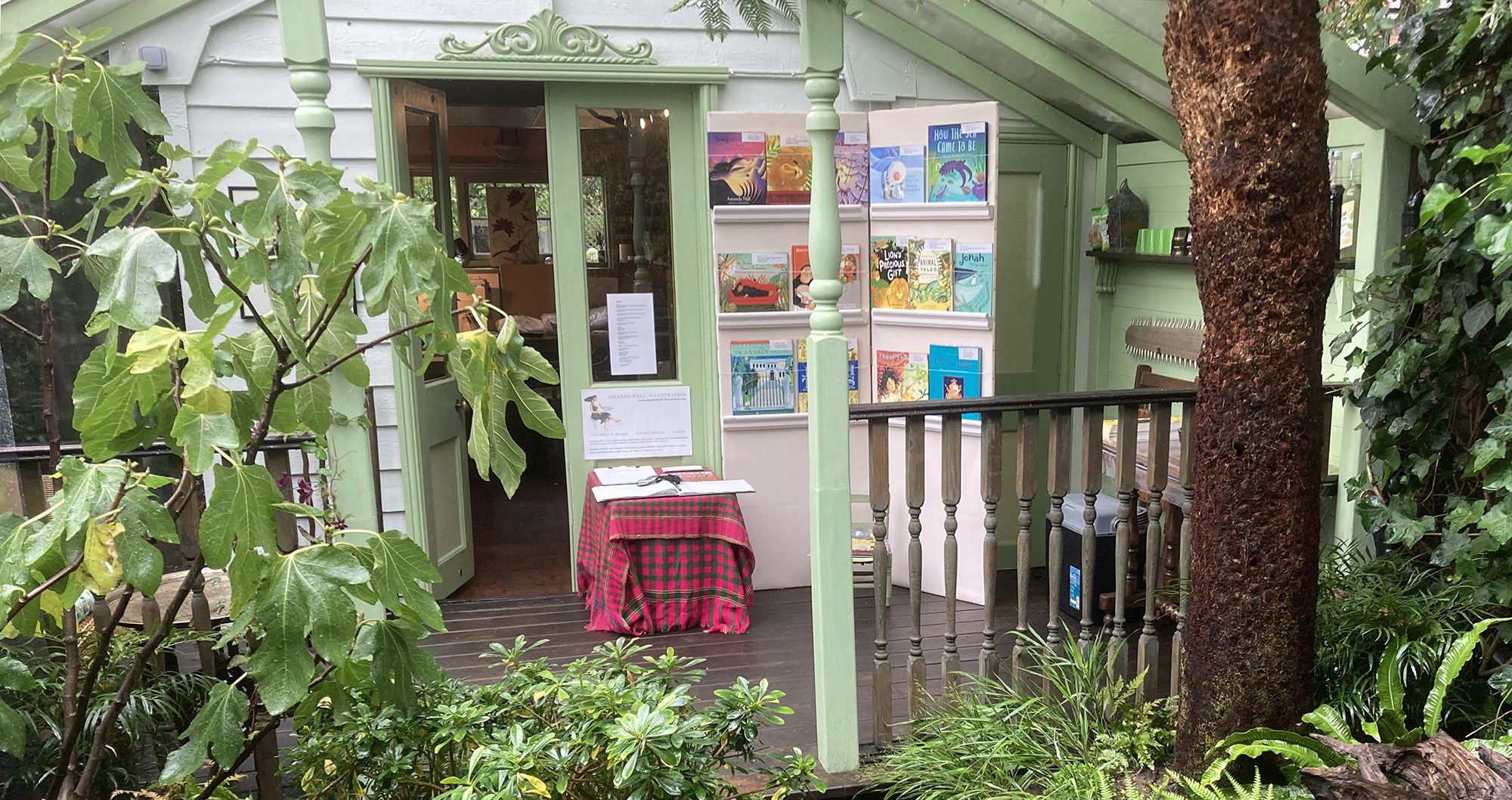
What first drew you to illustration, and when did you realise it could become a career rather than simply a passion?
I grew up in an artistic household. Dad painted and taught at art school, while Mum wrote, sang and played the piano, so my sisters, brother and I received plenty of creative encouragement. As the youngest, I loved drawing and making things and would spend hours completely absorbed in my own world.
That instinct took me to art school, where I began with a foundation course and explored different visual disciplines. I briefly considered specialising in textiles, but realised it would not sustain my interest. Later that year, I remember sitting alone in the art room creating a series of paintings for a small book about medieval life. I felt settled and absorbed again. Creating narrative images for books simply felt natural.
I enrolled on a three-year diploma in graphic design, with a strong emphasis on illustration and some typography. The tutors were mostly practising illustrators and gave us freedom to steer briefs in our own creative direction. During my second year, I was selected to complete a paid commission from a visiting publisher: a set of cards for the National Trust. Being paid properly for my illustration made the possibility of becoming a professional illustrator feel tangible.
PRACTICE
Your illustrations are known for their warmth, storytelling and distinctive style. What does your creative process look like, and how has it evolved over the years?
Looking back, my artistic identity has moved in a fairly straight line. I can still recognise elements of my personal style in drawings I made as a child: clear shapes, a sense of design and a love of colour.
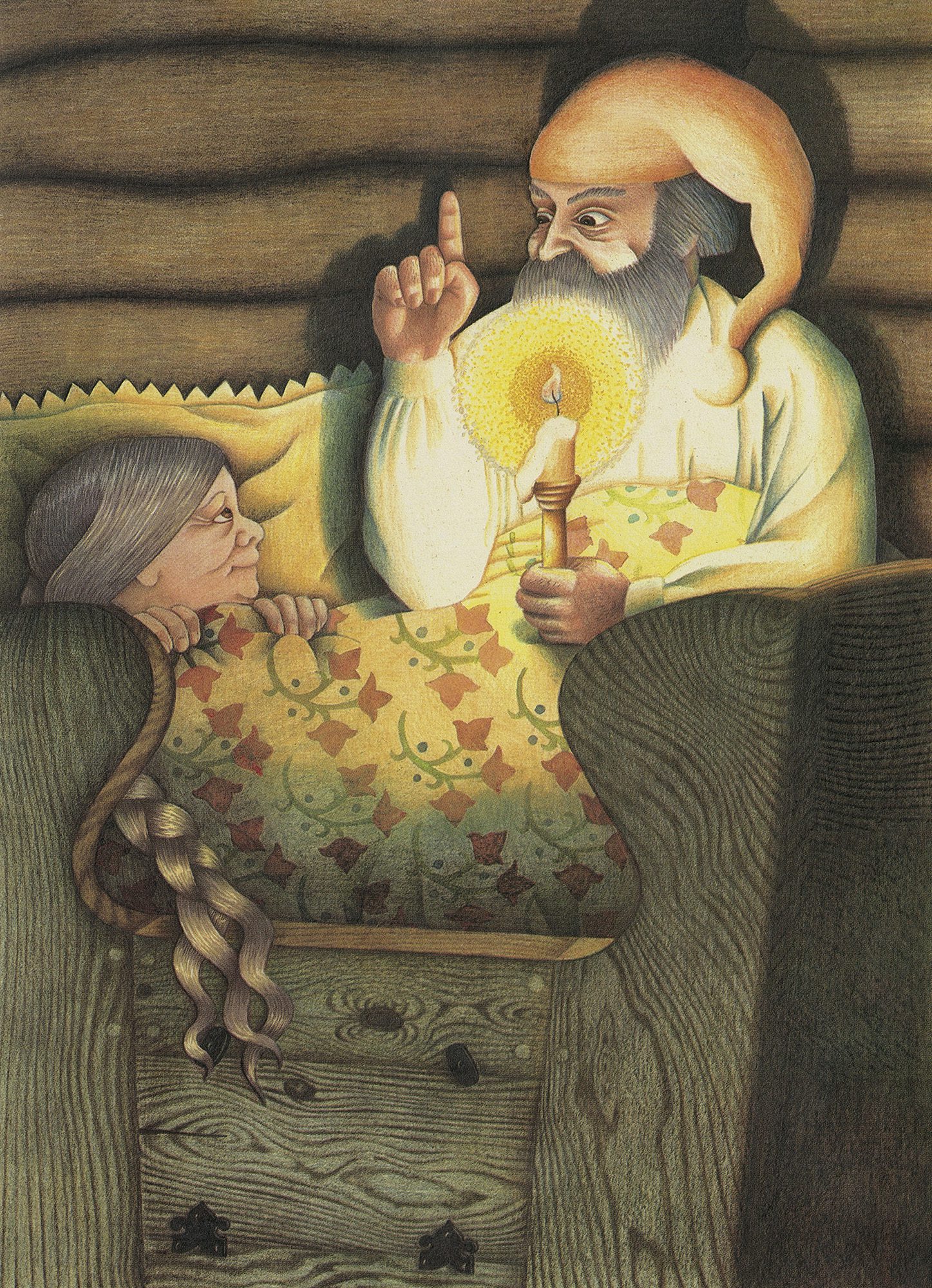
The core of my technique developed during my diploma. Watercolour initially frustrated me because I wanted a surface that looked more solid and graspable. I began layering pencil crayon over a dry watercolour base, and that combination gave me the quality I was seeking. Since then, I have expanded the process to include gouache, acrylic and pastel, using whatever feels right for the project.
I begin with loose, dynamic sketches, refining them many times to fit the page structure before client approval. I trace the approved roughs onto watercolour paper, stretch the paper and build the watercolour base. After erasing the pencil lines, I layer gouache, acrylic, crayon or pastel, usually working from dark to light. I now scan the finished piece and may refine it digitally.
My work today is the product of years of practice. I respond to the emotions in a text, whether sadness, humour or whimsy, and I gravitate towards animals, nature and archetypal figures. I enjoy constructing worlds that are not real, but still feel tangible.
PUBLISHING AND LICENSING
Your career has spanned children’s publishing, editorial illustration and, more recently, licensing and commercial collaborations. How has your career evolved, and what opportunities do you think illustrators often overlook when building a sustainable practice?
For the first twenty years of my career, I steadily built my reputation while slowly finding my feet financially. In the early days, I took my portfolio around London publishers and said yes to practically every job. I tried editorial illustration but mostly hated it. It left me cold and did not suit the way I work. Children’s publishing, on the other hand, felt like home.
My technique is time-consuming, and a single picture book can take up to three years. Learning how to make the artwork work for me in several ways has therefore been vital. Selling original artwork is one route, but the biggest opportunity illustrators often overlook is their own intellectual property.
Early in my career, I understood very little about contract law. Publishers often try to acquire all image rights, including rights they have no intention of using, and artists can unwittingly sign them away. Art colleges should equip students with stronger business knowledge around copyright and licensing.
Merchandising operates across several separate industries and can feel difficult to access. Until recently, my licensing opportunities happened almost by accident when designers found my work online. I am now taking a more proactive approach to commercial collaborations rather than waiting for opportunities to find me.
CREATIVE LONGEVITY
The illustration industry has changed enormously throughout your career. What has helped you continue evolving while staying true to your own creative voice?
In the mid-1980s, many independent UK publishers were absorbed by a few large companies. Barefoot Books launched in 1992 and went against that trend. My style found a home in its collections of global myths. I illustrated three collections for Barefoot, which brought my work wider attention. Commissions followed from Templar, Pavilion, DK, Lion Hudson and Frances Lincoln, where I also wrote the texts.
Picture-book styles move in and out of fashion. The British market shifted towards flatter, digitally produced, cartoon-style art designed for quick visual impact and commercial media tie-ins. Around the turn of the millennium, expanding into the US market changed the direction of my career. Its scale allows independent publishers to thrive and creates room for a wider range of artistic styles. Virtually all my work and my current agent are now in the US.
Staying true to my creative voice also meant learning to say no. Around 2007, I was offered many biblical books, including one written by Desmond Tutu. Turning that down was a defining act of self-determination, but it opened the door to projects that suited me better.
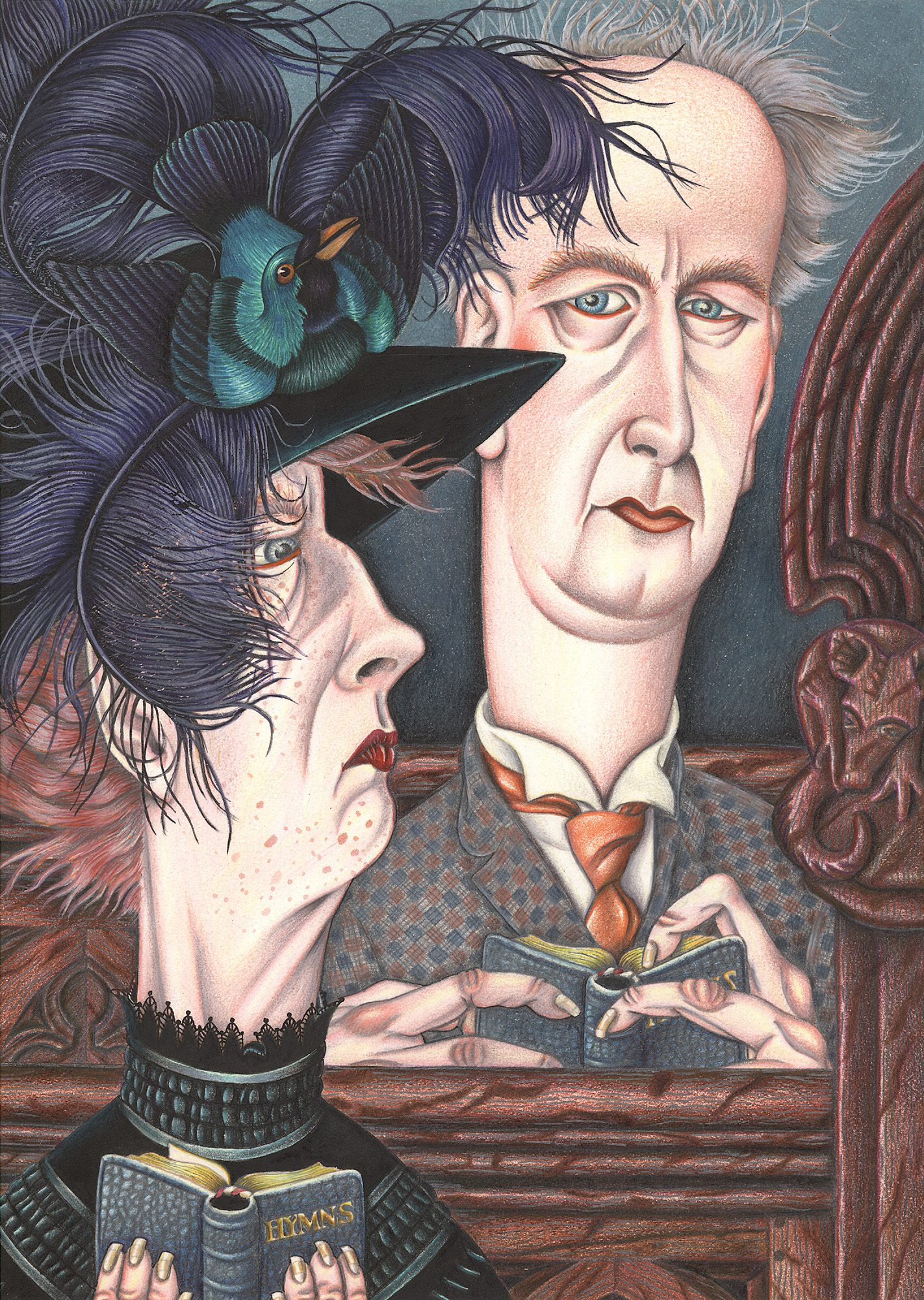
At the Bologna Children’s Book Fair in 2008, I connected with publishers including Eerdmans. That eventually led to direct creative partnerships with authors such as Michelle Markel, Jamila Gavin and Dawn Casey. Remaining alive to new possibilities has been essential to my creative longevity.
BREAKTHROUGH
Looking back, what has been your biggest breakthrough moment, either creatively, professionally or personally, and how did it change the direction of your career?
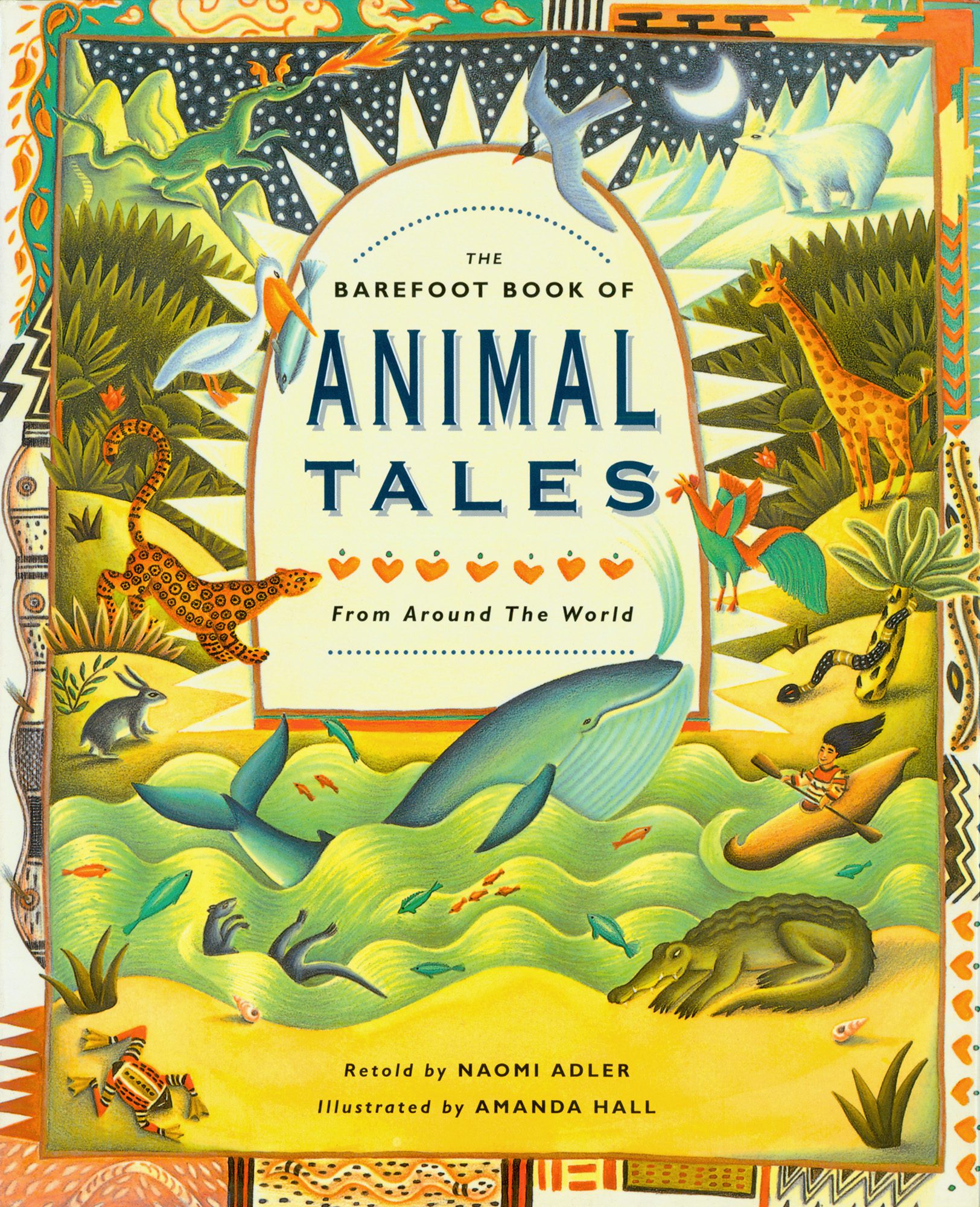
Two moments opened new levels of creativity and professional freedom for me. The first came in 1995, when I illustrated The Barefoot Book of Animal Tales by Naomi Adler.
I was given considerable creative freedom and responded to the playful text with decorative borders, motifs, vignettes and full-page spreads.
Published in 1996, the book received coverage in The Observer and The Independent. It has never been out of print and has been published in ten countries.
The second came in 2009, when Eerdmans offered me Michelle Markel’s The Fantastic Jungles of Henri Rousseau. I had loved Rousseau’s work since seeing it as a student.
His persistence and rule-breaking paintings inspired me to experiment with scale, fantasy and visual playfulness.
I worked with a new intensity, layering acrylic over watercolour to create a suitably painterly surface. The book was published in 2012, shortlisted for the 2013 PEN Steven Kroll Award and has been published in six countries.
Both books helped me move beyond my own internal barriers, but Henri Rousseau also expanded my commercial horizons.
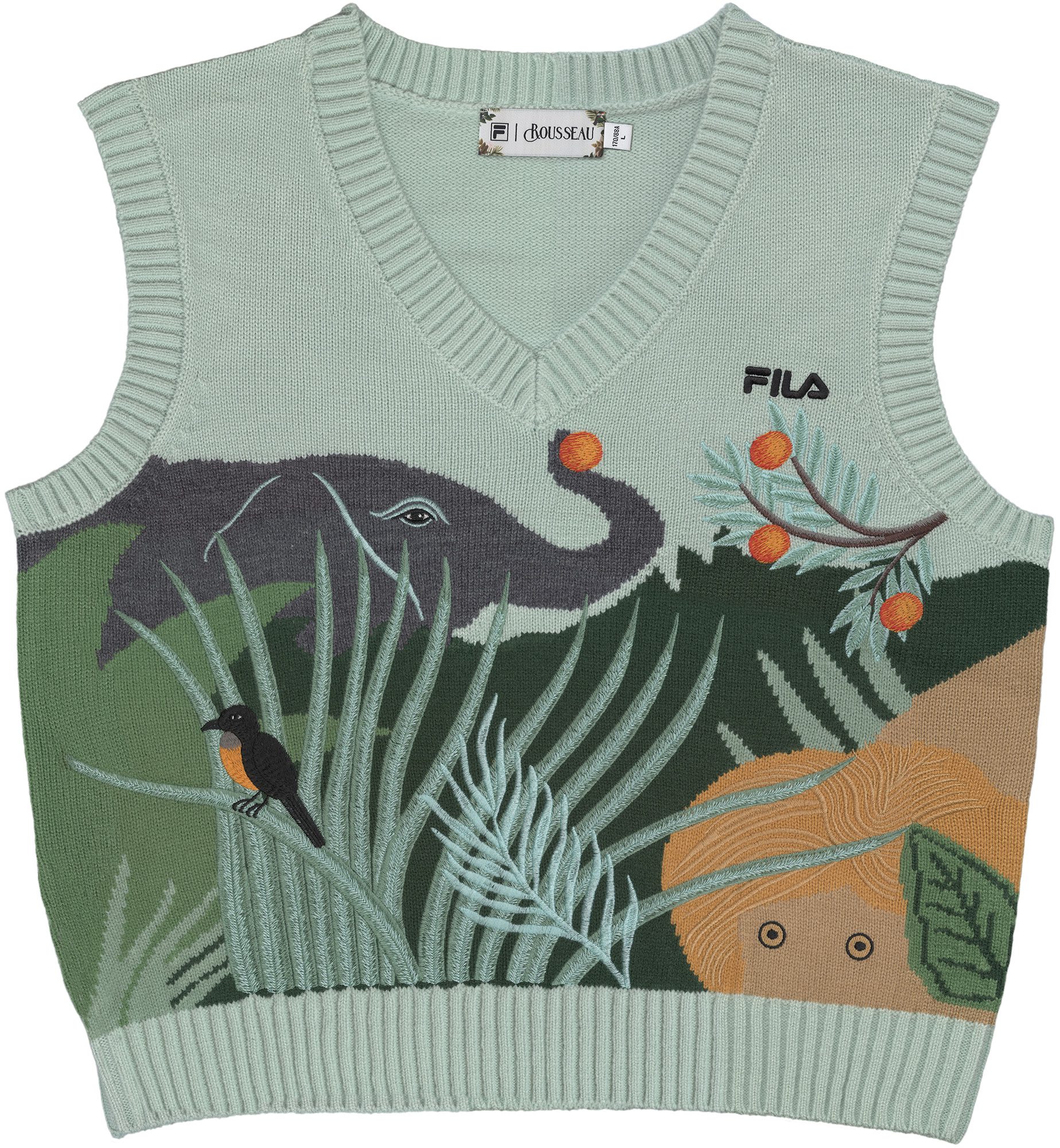
One of the illustrations was licensed to Fila for use in China under a contract worth $25,000.00. The book has prompted further merchandising enquiries and led directly to my current wall mural commission for a US university.
In her own words
Right now, in my practice, I am…
Fortunate to be doing exactly the kind of deeply fulfilling visual work I have always wanted to make. The imagery flows naturally. It still requires a huge investment of time, but there is no longer the same internal conflict or struggle. There is pure shape, rich colour and the pleasure of depicting subjects I itch to draw.
If I could tell every illustrator one thing, it would be…
Trust that reaching a state of creative ease takes time, but it is worth it. Keep developing your technical craft and look for non-orthodox ways of doing business. Treasure your creative autonomy, and never be afraid to redirect your focus towards projects that genuinely nourish your artistic spirit.
Discover more of Amanda Hall’s illustration, publishing and licensing work at www.amandahall-illustration.com.