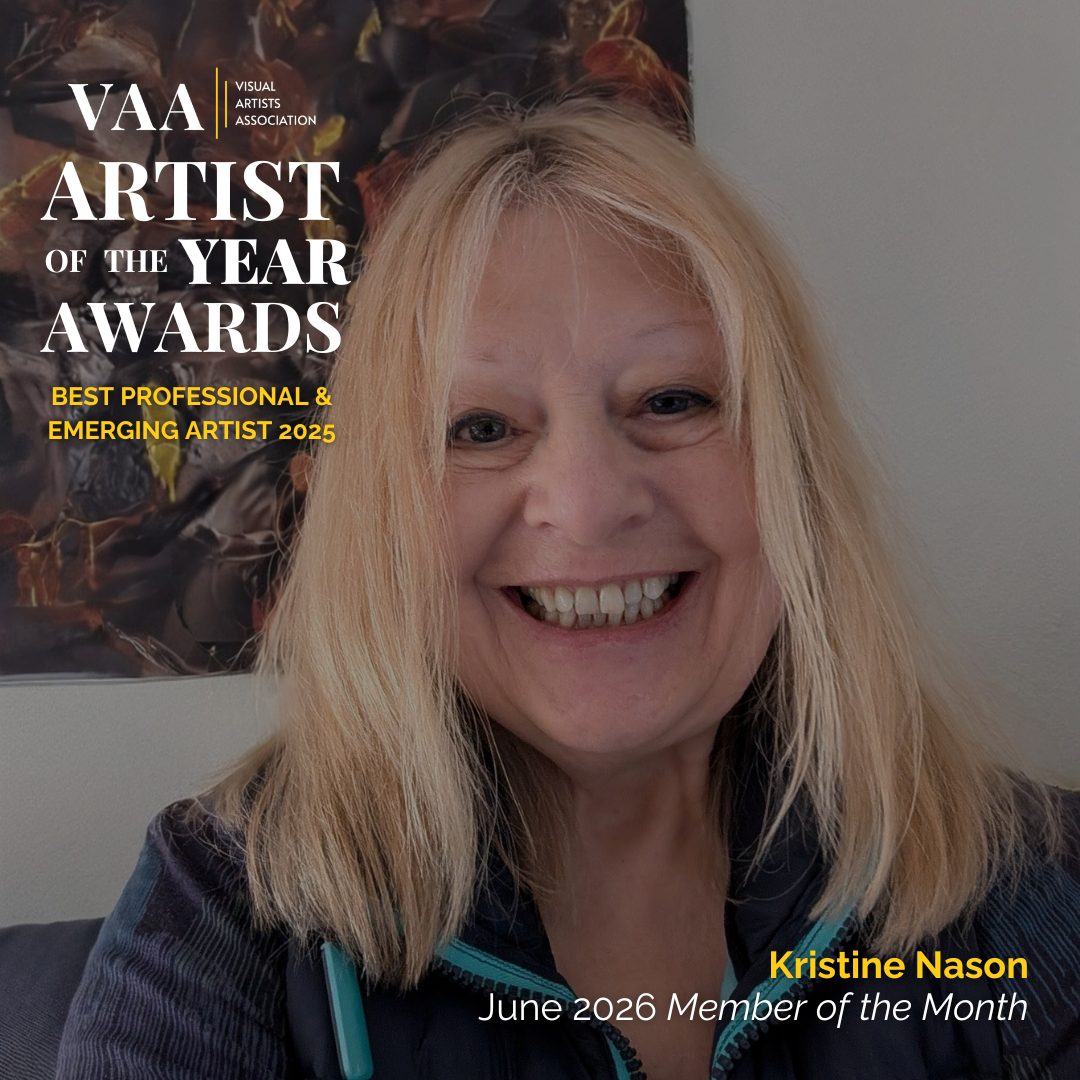
An Interview with Kristine Nason: Best Professional & Established – VAA Artist of the Year 2025 and June Member of the Month
Cara Roberts – Artist Feature – VAA Member of the Month June 2026
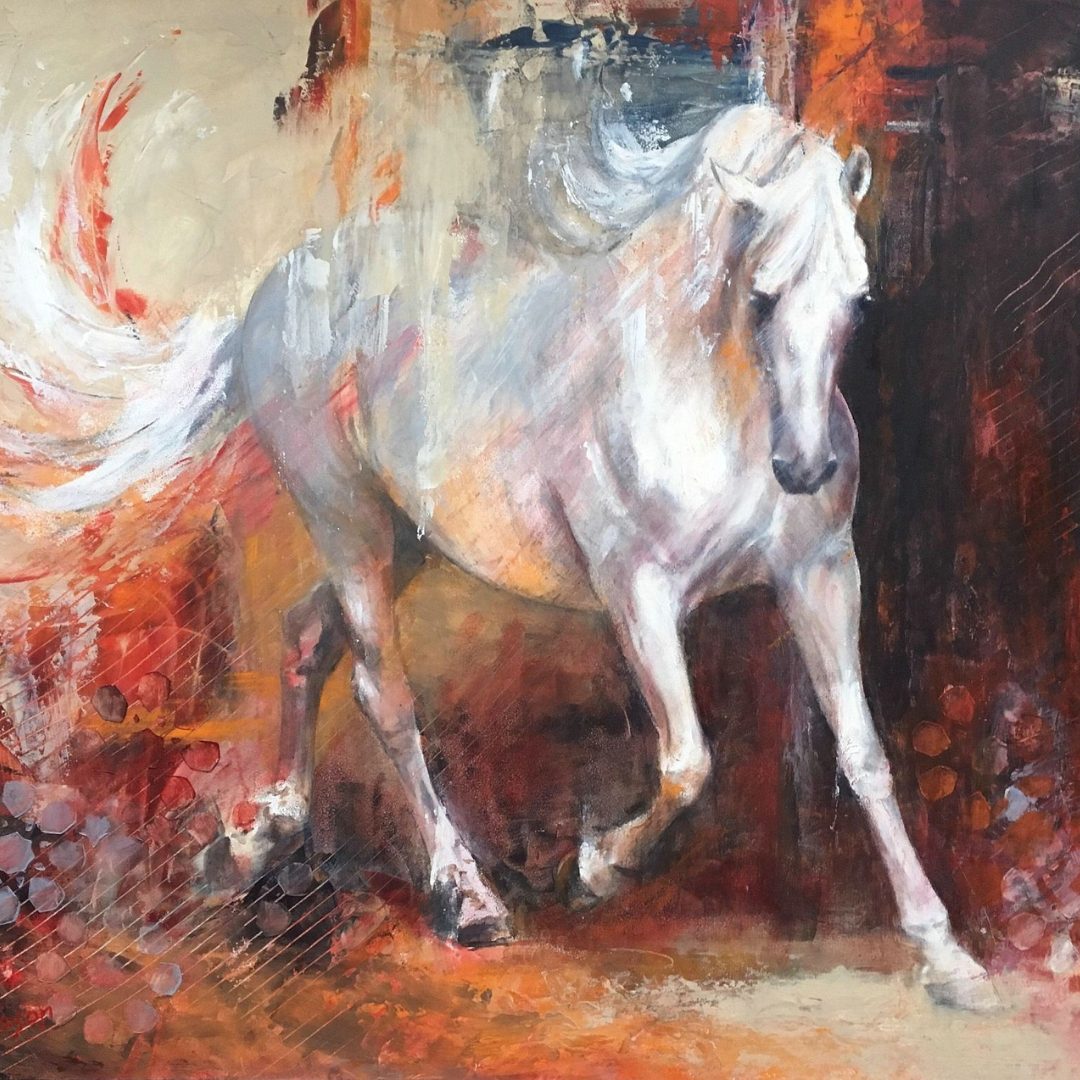
Kristine Nason is a Southern-England based multidisciplinary artist whose work moves fluidly between traditional and contemporary practices. With a focus on equestrian art and portraiture, her career reflects a strong record of achievement and professional recognition, with notable achievements including: The Winner of VAA Professional & Established Artist of the Year 2025, Highly-Commended Finalist: British Art Prize 2023, Finalist: VAA Professional Artist Award 2023, The Winner of SAA Professional Artist of the Year 2023.
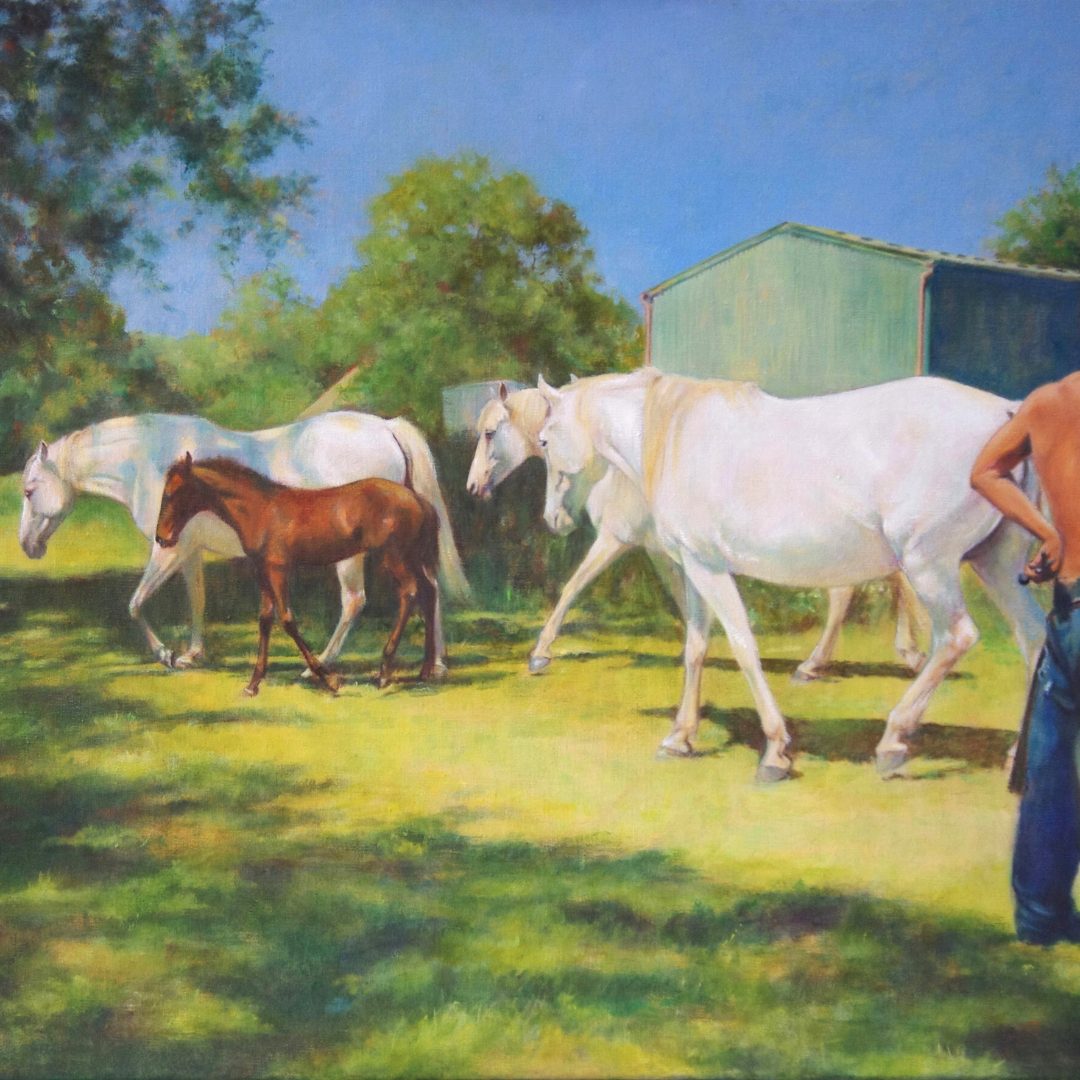
Growing up in the English countryside, Kristine quickly developed a deep love for horses – her true appreciation for them began when her great-grandfather, who was a professional artist, encouraged her to observe, understand, and translate their beauty into art. By the age of just 14, she sold her first equine painting to local galleries, and from that point onwards, she became a regular exhibitor. Kristine initially trained as a graphic designer and worked in advertising before pursuing a career in Fine Art as an artist/print-maker. She ran a fine-art publishing company with two London galleries and an international distribution network for their limited-edition silk-screens and lithographs. Her career changed course when she had children – she became a successful watercolourist specialising in equestrian art and portraiture, quickly growing an audience of keen buyers. She became busy with commissioned work; exhibited with National art societies, and was elected to full membership of both the Society of Women Artists and the Society of Equestrian Artists. Kristine has taught portraiture and equestrian art in watercolour through workshops and demos to art groups, and to students on a 1-to-1 basis in her studio. Her work also has extended to involvement in various art committees, working as an illustrator, and teaching drawing courses for the Open University. Along the way she’s written or featured in various magazine articles, including International Artist, American Art Collector, and Paint & Create.
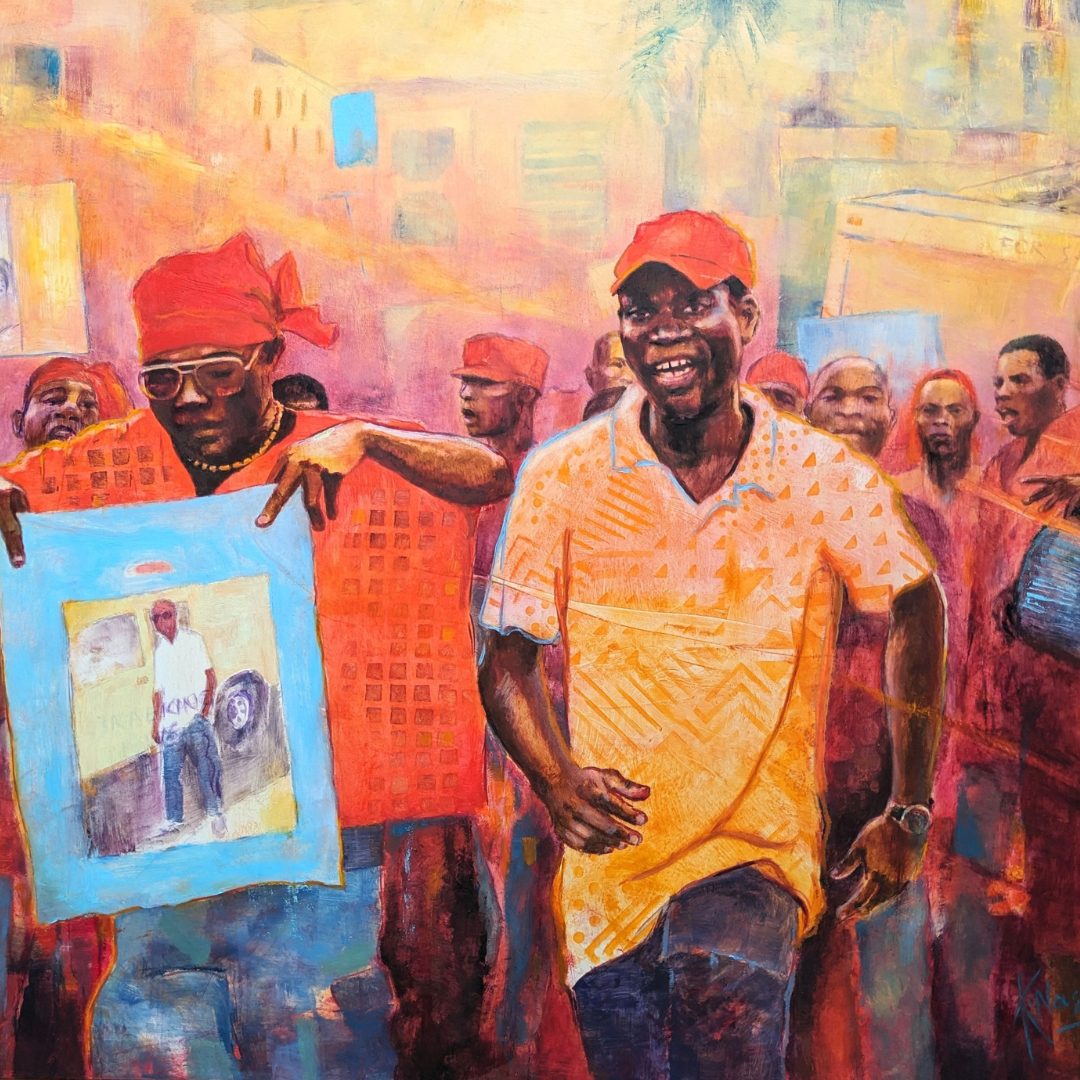
Although Kristine always liked to experiment with styles and materials, her creative output was essentially realist art. There did, however, come a point where she started to question her attachment to correctness and detail, and felt that her art was lacking authenticity. In 2020 she began studying advanced-level oil painting. This was the catalyst for a complete re-evaluation of the way she thinks about art, and discovered a new creative voice. She realised that the quest for perfection was stifling the joy of making art, and from then on she allowed serendipity into her process. These days she navigates between two distinct bodies of work – the equestrian art which has always been part of her identity, and now, a series she calls the ‘Ghana Narratives’. With a Ghanaian husband and two children, and living between cultures, the Ghana Narratives are a document of what she sees and experiences when she’s in that country. She learns from her husband as they embrace each other’s cultures, yet share the same values, and watch their children as they negotiate the complexities of liminal identity. These works explore the colour and rhythm of daily life around their home in coastal Accra, and there are stories to be told. As a concerned observer she will sometimes use her art to spotlight the challenges of colonial legacy, environmental pollution and exploitation, all wrapped up in the resilience and dignity of communities who bear the burden.
A typical day for Kristine is not linear. She lives a robust life, not just as a full-time artist, but a wife, mother, and grandmother. Exercise, music, and cooking also play a key part in Kristine’s life – allowing her creativity to seep through in more ways than one. Unfortunately, due to her Type 1 Diabetes, she is prone to sudden debilitating drops in blood sugar, and when this happens she has to take a break until normal function returns. This can be as long as 45 minutes, which really affects how much she can achieve during her working day. Due to this, she has learnt to monitor herself constantly and use her time as best as she can.
To learn more about her work, visit: https://www.kristinenason.com
Wherever I go, and whatever I do, I sketch, and I take a lot of photographs.
This is my ‘Library of Inspirations’, for reference, rather than copying. I’ve
come to understand that art, for me, isn’t only about replicating what we see,
it’s more about interpreting how I feel and then conveying that feeling to the
viewer. I’m not a fast or prolific artist. Ideas often percolate for a long time
before it feels right to develop them into an artwork. I’m still learning about oil
painting, and by looking at the processes of artists from various artistic periods,
the big take-away for me has been that in my own studio, I am the creator. I
have different mediums and tools which I can experiment with in any way I
please, so I do. However, I always consider the archival integrity of any works
that will be sold or exhibited. It would be easier if I had a standard process,
but I often go off-piste. Everything starts with a sketch, usually just pencil or
charcoal, and I’ll develop any artwork, whether it’s going to be finished as a
drawing, watercolour, acrylic, or oil, in various stages depending on the result
I’m aiming for. If I’m doing random play to loosen up without any other
intention, I’ll let the process dictate itself, but usually I do need to have a
composition planned before I commit to paint. My sketches are usually worked
on paper, and re-worked as many times as I think necessary before I copy
onto tracing paper and transfer to a final prepared support (paper, canvas, or
board). If I’m doing an oil painting I’ll establish the major line work, then do a
washy imprimatura or grisaille. Blocking in major shapes with thicker paint
consistency comes next, and then the fun begins… I’ll use various media and
paint-mediums to achieve whatever results I’m looking for, but the painting will
usually dictate its own direction and I’ll follow my instincts, making sure that
the end result is balanced and leads the eye.
I think my art has always been guided by a profound sense of empathy,
curiosity, and a desire to honour the beauty of life. From the moment I started
drawing horses as a child I’ve always wanted to invite viewers to see what I
see and feel what I feel. In my latest series of narratives I want to share the
quiet dignity and hope within Ghanaian communities. Living between cultures I
feel it’s my duty for the sake of my children, and I’m able to approach my
subjects with both the intimacy of an insider and the curiosity of an observer.
This gives me a unique perspective — one that bridges tradition and innovation,
past and present. My art is not just about beauty, but about bearing witness to
the complexities of identity, memory, and social justice. Occasionally I’ll
highlight the enduring effects of colonisation and environmental challenges,
trying to use my creative voice to call attention to what needs to be seen.
There’s a quiet activism in these works, a belief that art can document,
honour, and even help heal. I create not just to record what is, but to invite
reflection and spark conversation about what could be. This is my drive to
create art that matters – art that tells stories, bridges worlds, and leaves a
lasting and deeply meaningful impact.
What is your creative process? What outlook guides you?
What is your definition of artistic success?
Being noticed by curators, gallerists, and the movers and shakers of the art world. Being offered solo shows by high-profile venues and institutions. Invitations to collaborate with big brands. Most of all, having a recognisable style and a unique voice that denotes an artist as a leading figure in their sector.
Learning to paint in oils with guided tuition from a Master oil painter who
enabled me to review my entire understanding of art. This opened my eyes to
new ways of assessing my own work and the work of other artists. It was
liberating to work with someone so generous in sharing their knowledge and
skills and I learned to work in any way that feels right for me. I try to balance
technical skill with emotional immediacy, allowing intuition and
experimentation to guide my process.
My most noteworthy accomplishment for 2025 has got to be earning the
Professional & Established Artist Award in the VAA’s Artist of The Year
2025 competition! I’m still feeling the benefits of that.
I’ve exhibited at London’s Mall Galleries again with the Society of Women
Artists.I spent some of the summer at our house in Ghana – not just relaxing,
but learning more about the country and collecting inspiration for new
work. I’ve built a new website that reflects my current practice and status,
(replacing a beautiful, professionally-designed website I had already,
which was dedicated solely to my work as an equestrian artist, and I
didn’t have the skills to update it). There’s still work to do on my new
site, such as setting up a print shop and spending time on SEO, but that
will be done soon, and meanwhile it’s functional.
What are some of the accomplishments you are most proud of? What are some of the highlights from the past 15 months?
What’s the one piece of advice that has helped you the most?
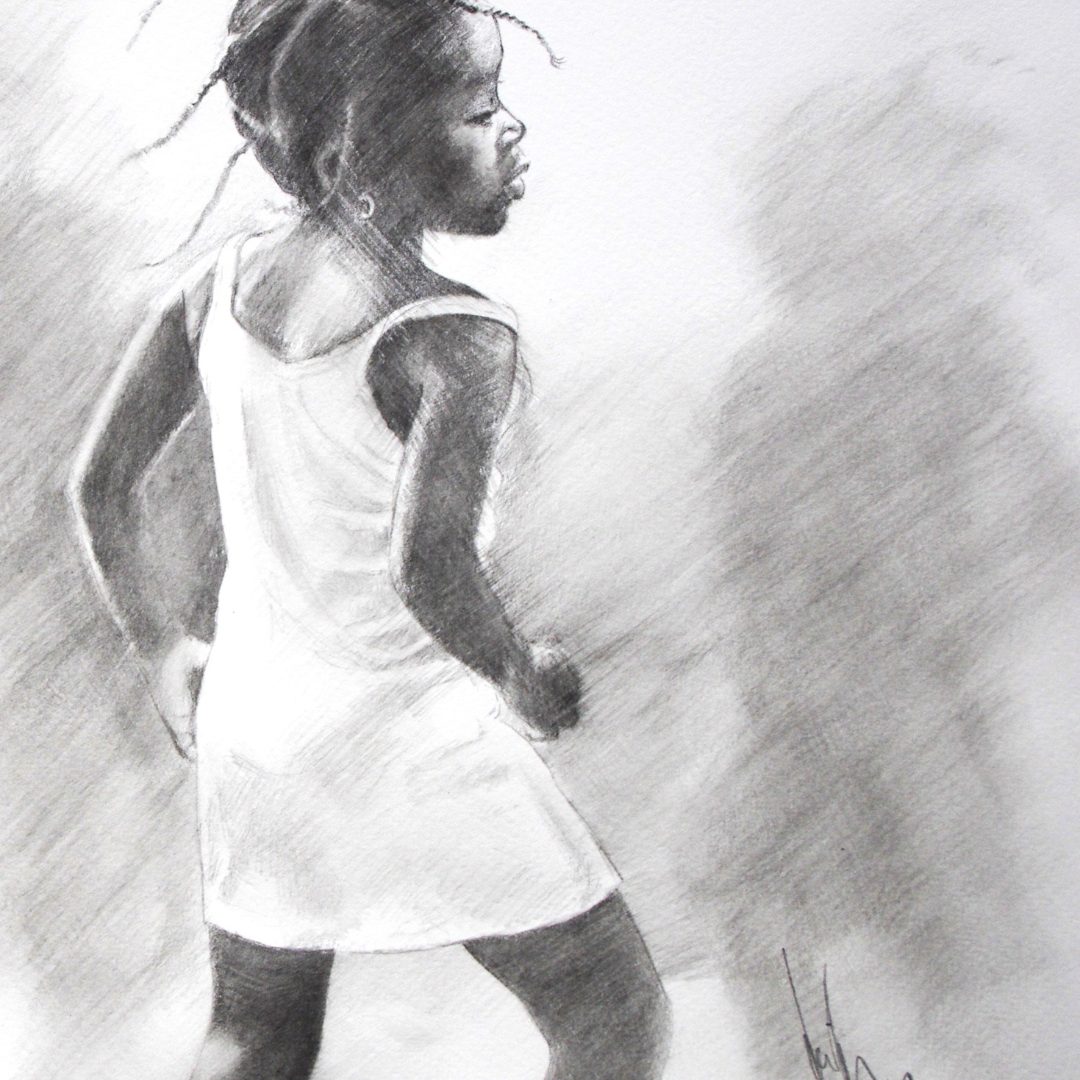
When I was a tiny child, with a pencil in my hand and a heart full of
determination, my great-grandfather (who had earned a good living as a
professional artist) taught me not just to look, but to see: to observe every
nuance and character of the horses that I so badly wanted to draw. Through
constant practice I began to understand their patterns of movement and their
nature, so that eventually I could draw them very convincingly. That helped me
enormously in my career as an equestrian artist and portrait painter. However,
it became a handicap later, when I moved towards abstraction!
Practice and perseverance are constant mantras that help me sustain the flow
of creation, and for any exhibiting artist it’s important to treat rejection by any
exhibition/competition as part of the learning process, and move on.
Artists are often the target of scams, disingenuous competitions and open calls, or requests to donate work for fundraisers with a vague promise of exposure. I would like to see the work of artists, and our profession as a whole, being treated with more respect. My biggest obstacle personally is not being able to drive. I had to give up driving about eight years ago because of a health condition, and in many ways it felt as if my life fell apart then. No more art group meetings, no more visits to stud farms, polo matches, equestrian events, or mixing with ‘my tribe’. I live in the countryside where public transport isn’t efficient at getting me to places I needed to be to sustain the sort of work I was doing. My husband is as supportive as possible, driving me to important functions and events, but I
don’t expect him to give up his days to support my practice. I had to think outside the box, and slowly turned my interest to making work based on life when I’m in Ghana. It was a good move, and so far, it’s proving more successful than my equestrian art.
What do you find hardest about improving your arts profession? What are your current obstacles?
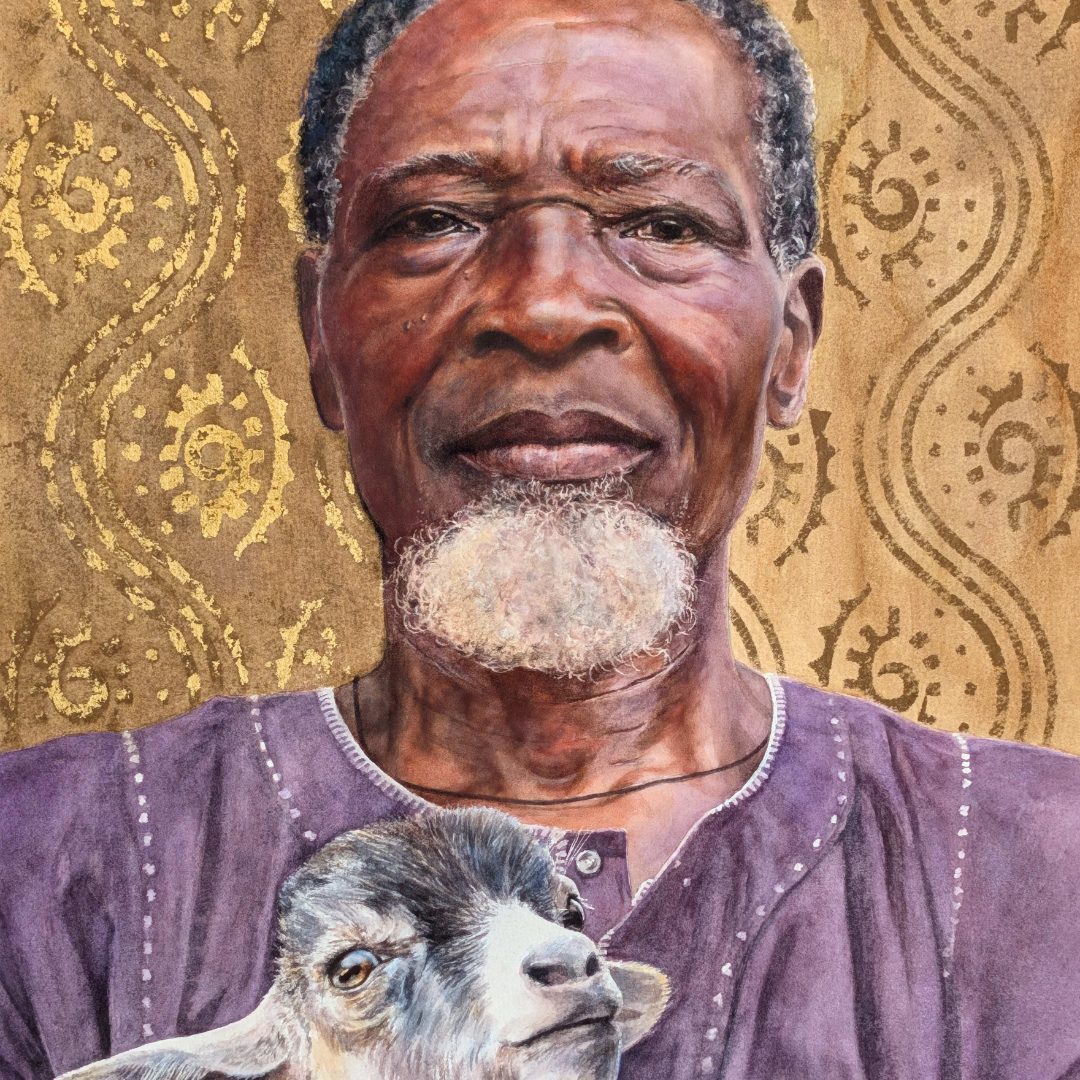
What career goal is your current priority? How has the VAA helped your journey so far?
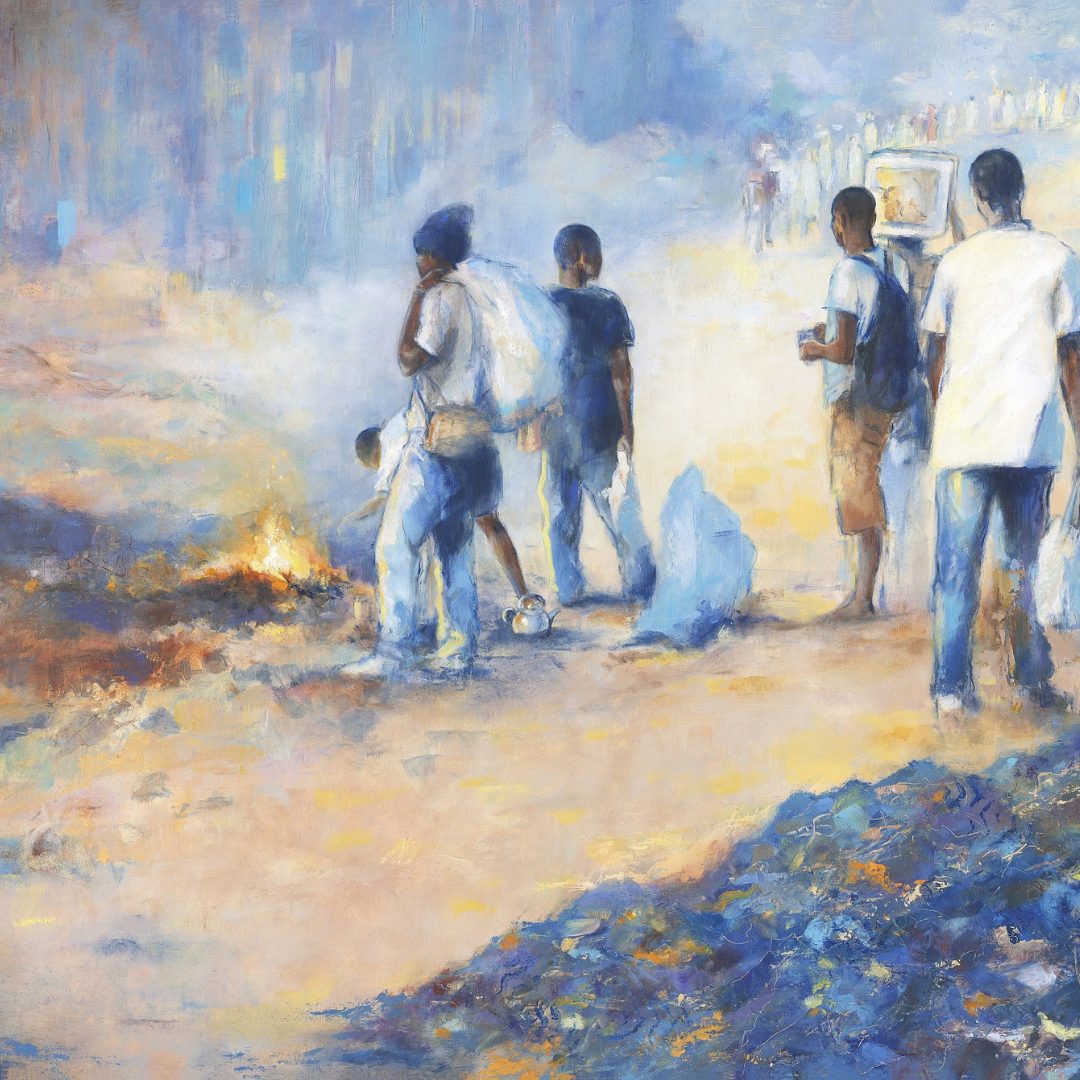
Having two distinct bodies of work, both of which are strong and meaningful to me, means I’m at a cross-roads. For a long time I’ve felt held back from promoting either of them (or myself as an artist) by the conflict in my mind, as I realise that curators look for artists with one unified body of work. However, in the coming year, rather than brushing one of them under the carpet, my plan is to lean into this duality as an opportunity for growth and clarity. Despite the differences, I know that both strands of work carry my creative values and commitment to beauty, emotion, and storytelling. I want to experiment with bridging-pieces, creating a small series that subtly blends elements from
equestrian and Ghanaian lenses. Meanwhile, I’ll be working flat-out to extend both individual ranges and see where it takes me!
In my first year of membership with the VAA, I was absolutely thrilled to be selected as a Finalist for the Artist of the Year 2023 Professional Artist Award. Three of my artworks were included in a virtual exhibition, and the whole experience gave me a great sense of validation and boosted my confidence. Being a VAA member brings a sense of community. I often take advantage of the wide range of zoom sessions: they’re helpful, targeted, and pertinent to artists at all stages of their careers. I’ve found the Vault on the VAA website is an outstanding resource of information for working artists, and I often turn to it. I’m also pleased to be covered by the insurance that comes with VAA membership, and I was able to terminate a subscription to another arts organisation I only kept for the insurance cover. All this has been amazing, but for me the most beneficial part of being part of the VAA community is access to Mentoring. At the time of writing I’ve only had a couple of sessions, and I had to stop while I got my act together. But Karen is very patient and wise and I’m looking forward to our next session!
A year ago I was in the throes of a debilitating period of burn-out. I would say:“Chin up… the talent’s still there. But 1), get organised; 2), tidy your studio; 3), document everything you’ve ever created, and if it’s not already on Artwork Archive, upload it (I’ve had an account with them for years, and know that keeping concise records of all artworks, exhibitions, sales, clients etc. is an essential part of running any art business, no matter how big or small); And 4), get that new website up and running!”
Is there anything you would like to say to the artist you were a year ago?
Meet Our Members
Dawn Fincham | September 2026, Member of the Month
An Interview with Dawn Fincham: Highly Commended Artist – VAA Artist...
Clare Hanna | August 2026, Member of the Month
An Interview with Clare Hanna: People’s Choice Award Winner – VAA...
Cara Roberts | May 2026, Member of the Month
An Interview with Cara Roberts: Best New & Emerging Artist - VAA...