
An Interview with Rebecca J. White: Highly Commended Artist – VAA Artist of the Year 2025 and March Member of the Month
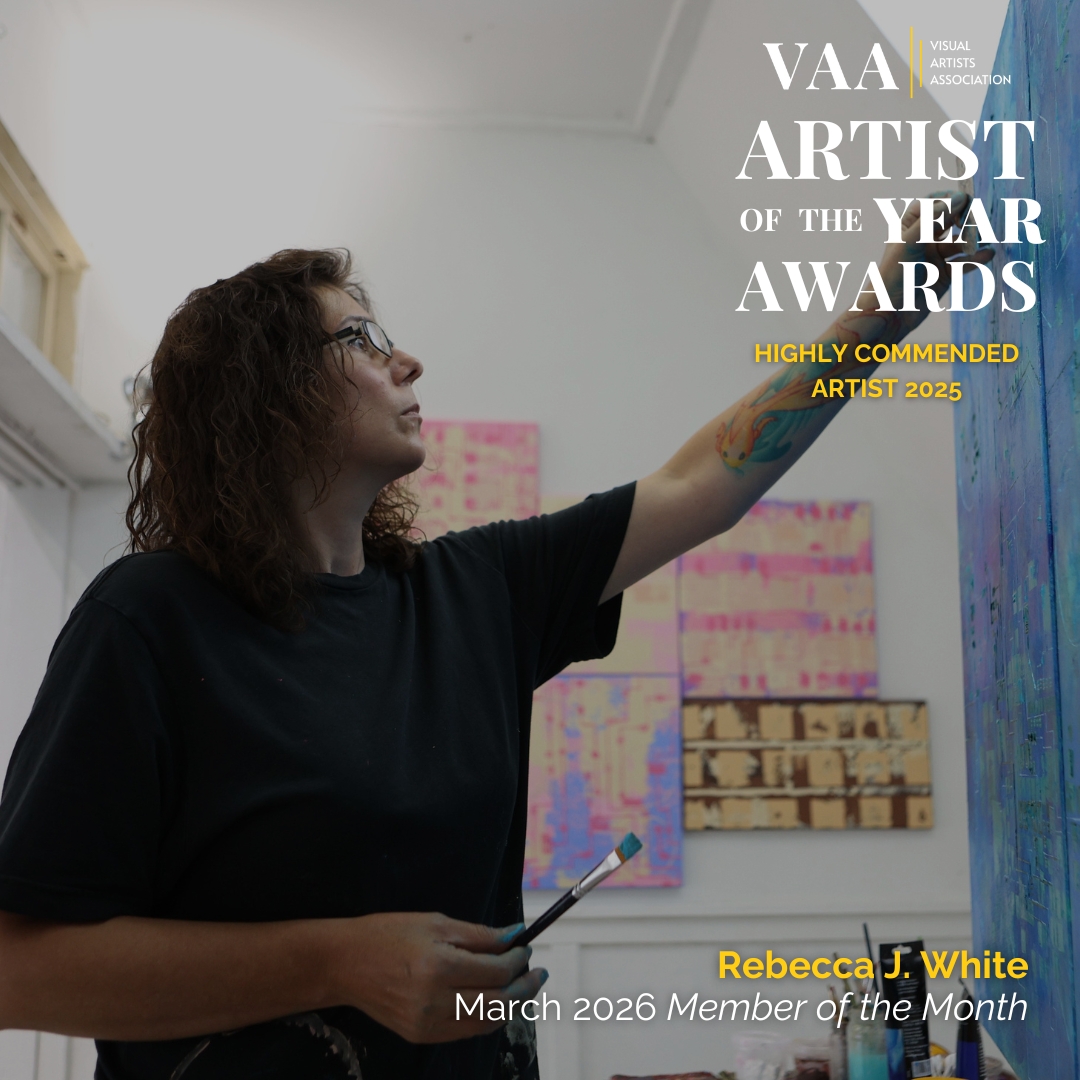
Rebecca J. White – Artist Feature – VAA Member of the Month March 2026
Rebecca is a painting and has over 25 years experience. Initially focused on ceramics during her undergraduate studies, she moved to Japan in 2000 to pursue her interest – however during in Kyoto, found a lifestyle of painting every day suited her best. She has allowed herself to explore a wide range of interested, including 8 years as an electronics technician in the US Navy.
Her professional experience as an electronics technician has deeply influenced the visual metaphors in her work. Her paintings use imagery of electronic circuitry to reflect the interconnected nature of systems, exploring how physical and perceived connections shape shared culture, traditions, and technologies.
She’s received formal training in MFA Studies at the Toyko University of the Arts, where she studied Oil Painting. Her time in Kyoto, saw her introduced to the aesthetic and philosophies of Japanese Artists, which have continued to guide her compositions and subjects. She is further informed with her palette and themes from her time in Gaeta and Naples, Italy.
Rebecca often works on several series of paintings simultaneously, some of which she has been contributing to for over 20 years, each series embodies a question that she is working to answer.
In the Birth of a 鳥居Torii series, she invites viewers to consider which places are worthy of their worship and explores the spiritual nature of ordinary spaces. In the Cloud-maker series, she explores imaginative origins of clouds. Some of her Cloud-makers are beautiful but may call to mind themes of environmentalism, as industry is the genesis. Other Cloud-makers come straight from her dreams and are completely divorced from reality, such as a cathedral’s frescoed ceiling creating clouds, or paintings hung in the stairwell of a filigreed golden palace.
These and other series can all be viewed on her website: https://paintingsbyrebecca.com/
Follow her on Instagram: @paintings.by.rebecca
My paintings are almost always set in physical spaces. Cityscapes, street scenes, mountains, skies, and meals are frequent inspirations, whether from real-life experiences or dreams. I’m frequently inspired by walks through forests or city streets. When I have an idea for a painting, I make a note of it with an image; that is, either a quick drawing, or a quick image search of something that will bookmark the idea for me to recall the painting later. I save the bookmark images in a folder called “Bahrain,” named for the place I was standing when I started the folder.
I’m already starting on the next one or two paintings before I finish the one I’m working on. I always finish one painting completely before I move on to another, so I don’t have more than 2 or three works in progress at any given time. Usually, I already know what I’m painting next because I like to work from my recent inspirations, but occasionally I’ll scroll through the “Bahrain” folder and daydream about what I’d like to paint next. I think I use the “Bahrain” folder for ideas more often when I feel like its too cold for an inspirational walk, or if I just need a break from current line of thinking.
I gesso 8 or 10 canvasses at a time, so I always have a variety of canvas sizes ready, and I start by brushing on large swaths of the light. Next, I work with razor blades and other straight-edged tools to block in color, sometimes blotting or fading with brushes. I transition exclusively to painting with custom-length razor blades as I use them to sketch out the major shapes and colors of a piece. Using brushes, I lay paint evenly along the round or straight edges of razor blades, caps and lids and I press them onto the canvas to make the shapes I need.
When a work is complete, I sign the bottom front, place a hanging wire and a description of the work on the back, photograph it for Instagram and my website, and then I post it for sale on ArtFinder at: https://www.artfinder.com/artist/rebecca-j-white/
One principle that guides what I choose to paint is that, while I only paint what I want to paint, I ensure each of my paintings will be able to find a home outside of my studio someday, so that I’m not eventually suffocated by mounting artworks. Since I paint every day, if works don’t sell, I soon find myself with less and less space.
So, I’ve found price points for paintings that keep them moving out of my studio, easily covering my investment and supporting my goals. And no matter what the messaging of the work may be, whether expressing themes of social, economic, industrial or other systems, I only create paintings that I would also want to own.
I stay true to what genuinely inspires me in every artwork, and this is the fuel that drives me to continue to paint as a lifestyle.
What is your creative process? What outlook guides you?
What is your definition of artistic success?
Success as an artist to me is the continuation of the life of a painter, every day. This manifestation of success of course requires personal discipline and creativity to engage in the creation of paintings each day. Additionally, a successful painter must also have patrons and sell paintings, not only to afford brushes canvas and paint, but to make space for more new paintings.
I’m definitely most proud of studying for a Master of Fine Art in oil painting at Tokyo National University of the Arts (東京芸術大学院). In 2004, after 4 years painting in Kyoto and one solo exhibition which sold out at the gallery in Maruzen on Kawaramachi, I applied and was accepted to study for an MFA at Tokyo National University of the Arts (東京芸術大学院). This experience significantly shaped my self-image as an artist. Under advisement a patron in Kyoto at that time, I’d not applied through the American embassy, but rather I participated in a series of live drawing tests, blind portfolio reviews, and multi-leveled interviews in Japanese, side-by-side with other residents and citizens of Japan, and was personally selected by Professor Koji Kinutani to join his graduate studio group (研究室). During my time painting in Tokyo, I developed many of the themes that continue to guide my work.
In July, I had a solo exhibition at a historic fort, West Martello Tower in Key West, Florida. To be honest the exhibition was a bit of a last-minute rush, as I quite suddenly realized I hadn’t shown in ages! I’d been living and painting in Key West for 3 years at that time but I’d really not been networking with area galleries or artists. Luckily, I’d been steadily selling works online to keep the paintings flowing out, but nevertheless my little studio was virtually crammed with paintings that had never been seen by any other person than me – ha ha! I reached out to one local gallerist, and she was wonderful to help me set up a quick little show.
What are some of the accomplishments you are most proud of? What are some of the highlights from the past 12 months?
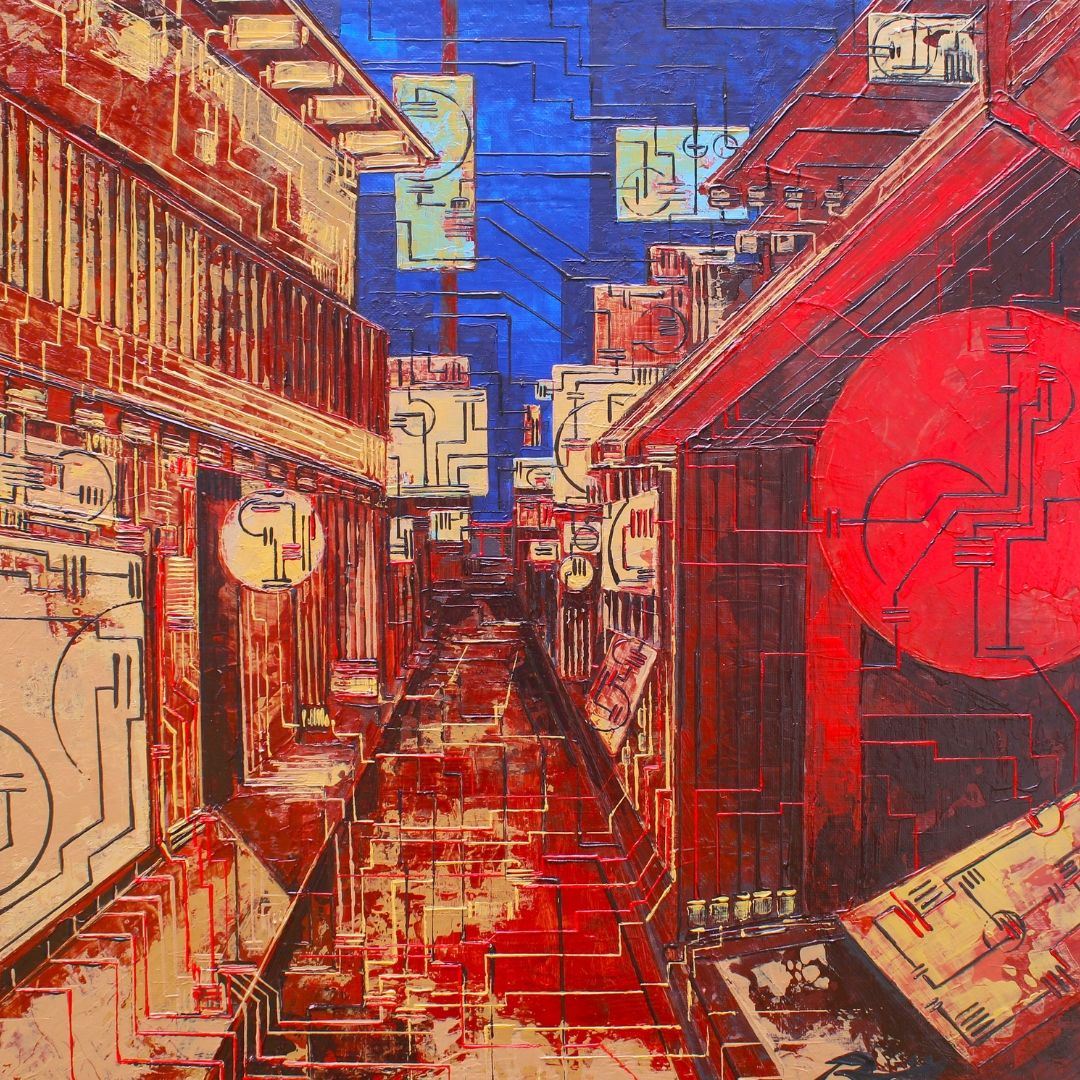
Could you describe how specific paintings illustrate your themes well? Describe an artwork that has special personal significance for you.
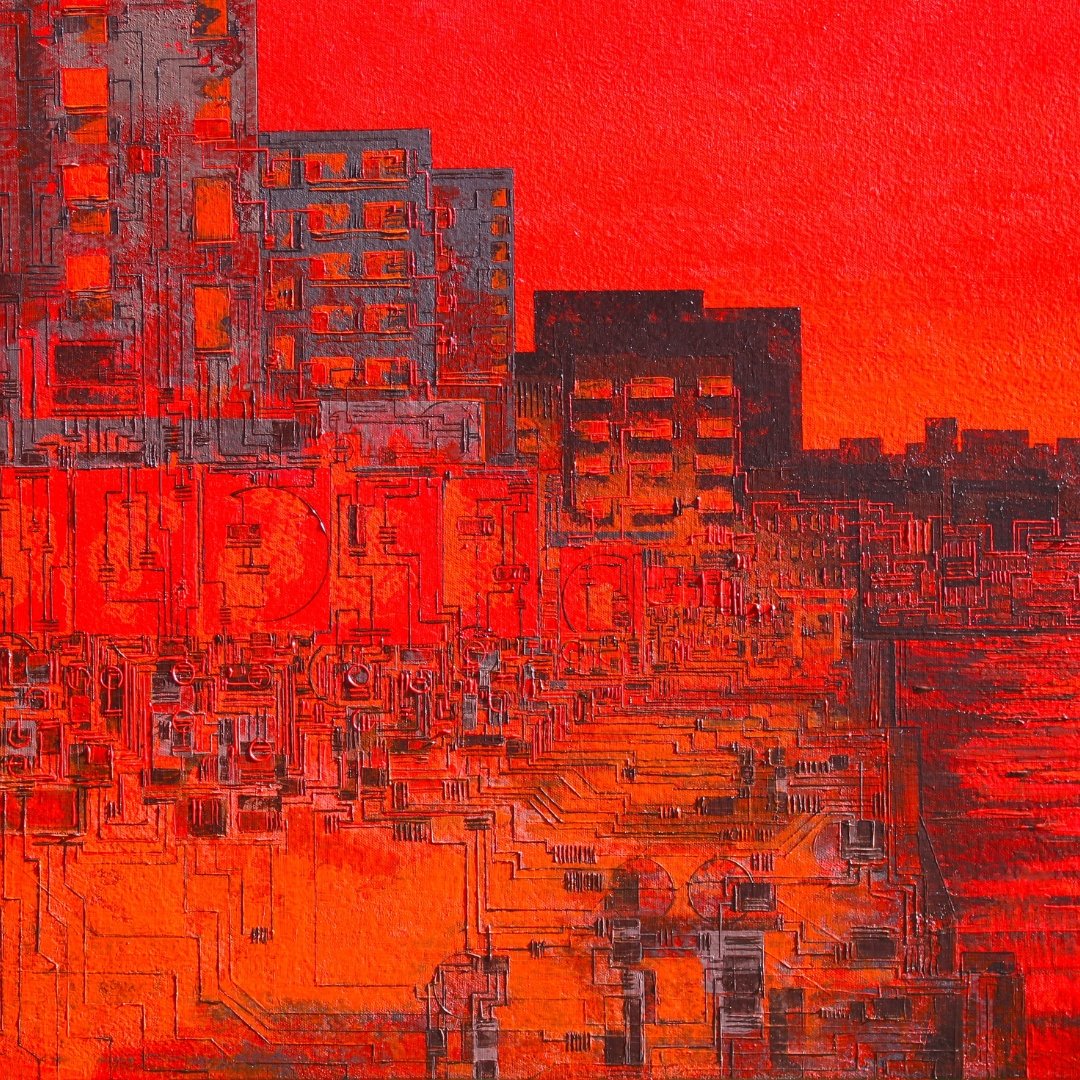
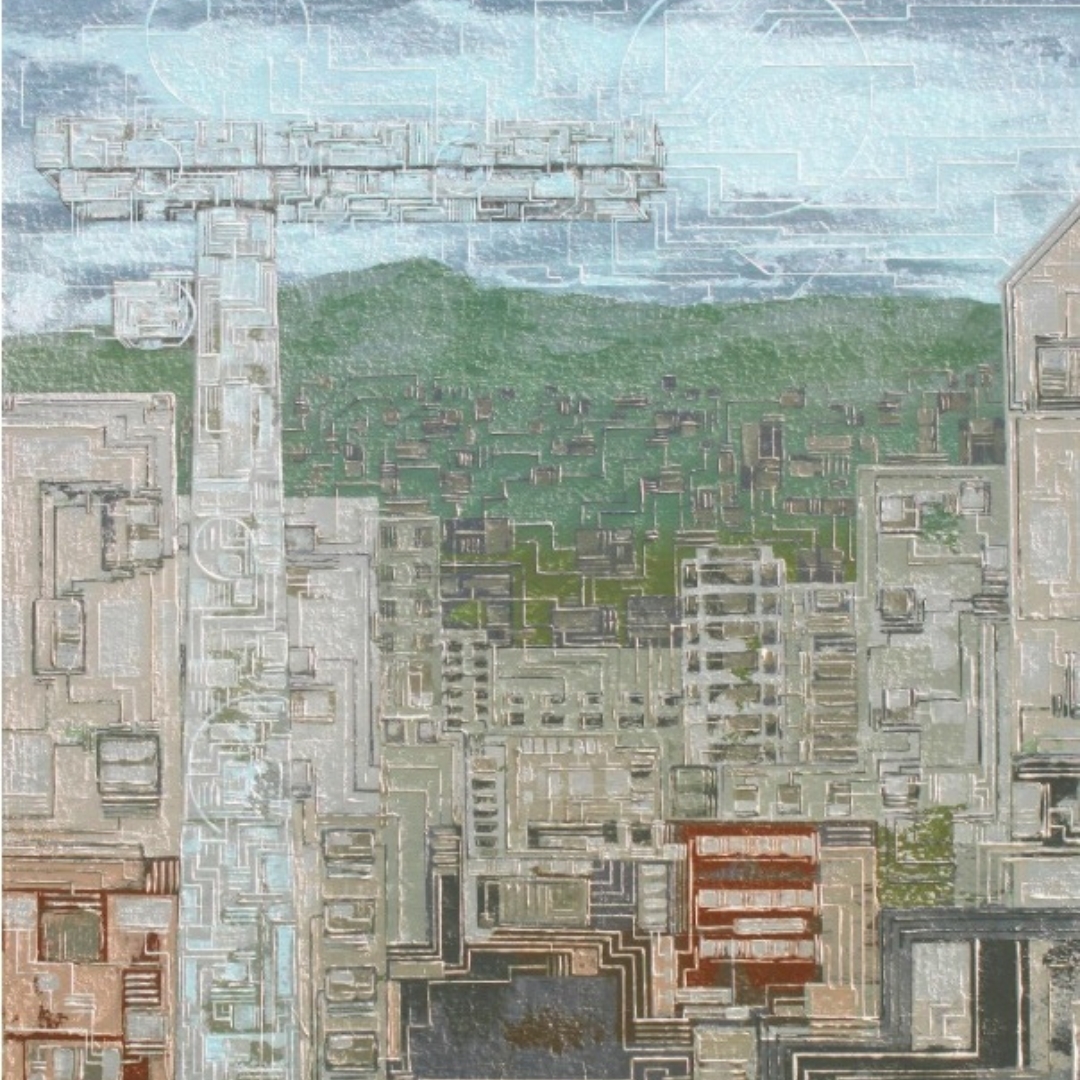
I create paintings within several running series, and one series that I’m working in a lot recently is Birth of a 鳥居Torii, which depicts the sacred 鳥居 torii in places that aren’t typically considered holy. In these works, I invite viewers to reconsider what is sacred or important.
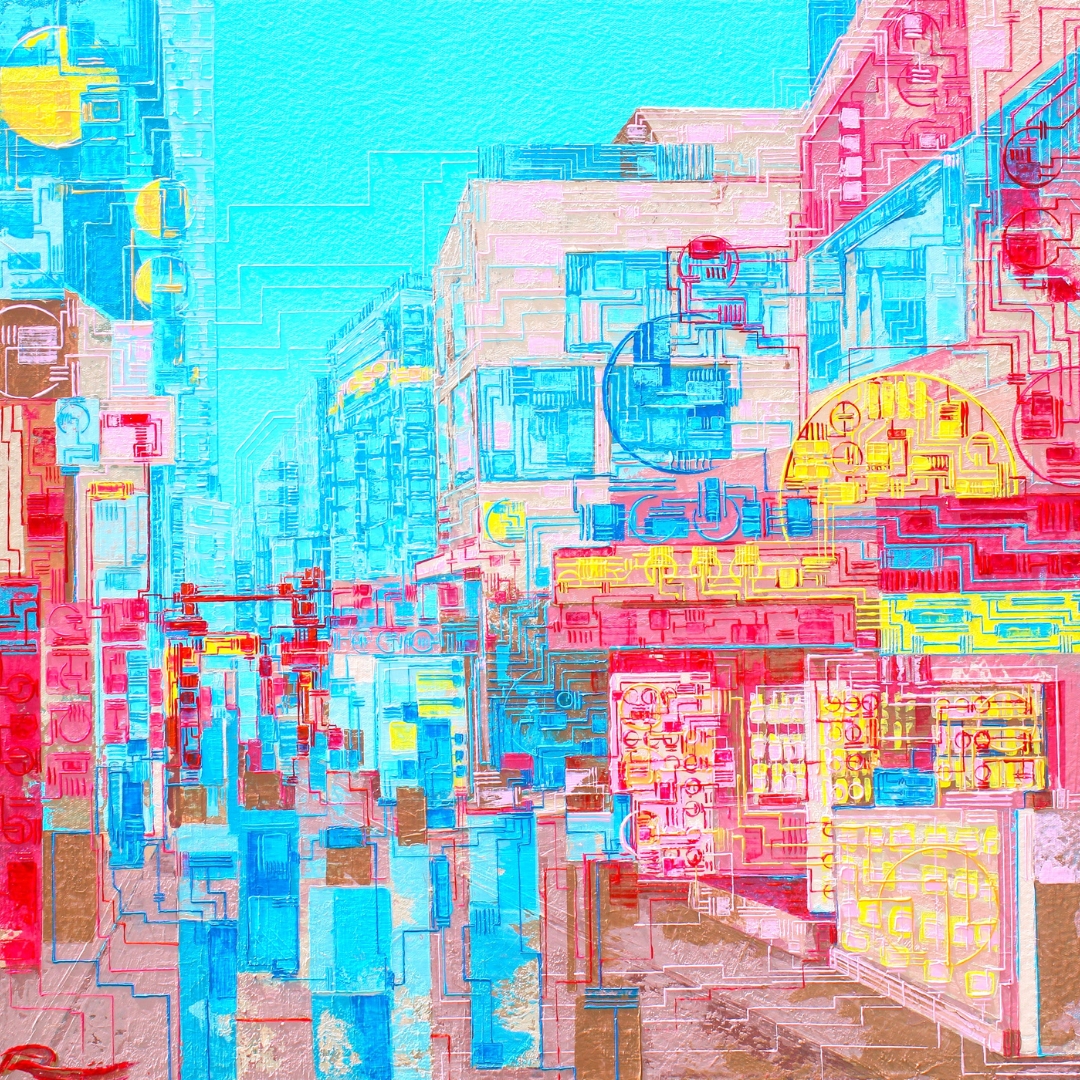
Birth of a 鳥居 Torii #16 (屋台 Yatai) – In Fukuoka at dusk – In Fukuoka, Japan the street stalls, or 屋台 yatai, have been lighting nights along the Nakagawa River for centuries. This area is busy every night with coworkers and friends who stop in for snacks and beer. It’s not typically thought of as a spiritual place, but it’s a place of everyday rituals that bind communities together. There’s a local pride in the history of 屋台 yatai, and a kind of warm familial feeling among strangers in the street and at each stall, not unlike interpersonal connections at a neighborhood shrine.
There isn’t an actual 鳥居 torii gate along the Nakagawa River here, so I’ve painted one in the distance to illustrate that this is hallowed ground. The torii gate that I painted is made from the connections of the 屋台 yatai street stalls to history, to the patrons, and to the city.
Cloud-maker #28 (山王神社 Sanno Shrine) has a special personal significance to me. In Nagasaki, there is a torii gate at 山王神社 Sanno Shrine that was partially destroyed by the atom bomb dropped on the city in 1945. When I stand under this massive stone pillar, I feel reverent toward the immense loss of life and the resilience of the human spirit now. I think about a friend of mine who travels to places of great tragedy and prays for all of the souls. I imagine that the torii gate protected as many souls as it could during that atrocity by casting a blanket of protective clouds over the city.
In this work, I try to show how 山王神社 Sanno Shrine harnesses power from the community to generate a soft cover of sheltering clouds even today.
Exhibiting. In fact, I’m most comfortable painting alone in my studio and selling works online, but I recognize that exhibiting works is also an important part of connecting with new patrons and opportunities. I’m not a very naturally social person and this aspect of my life as a painter is perhaps the most challenging. So, I’m currently working more toward networking with galleries and planning solo and group exhibitions.
The VAA has connected me with a new community of artists via social media who range from beginners to experienced professionals. I’ve appreciated learning from their collective knowledge and individual perspectives, and I’ve really had fun participating in the candid shared commentary and experiences in our social media groups and chats. The community has been very welcoming and supportive.
Additionally, the VAA’s professional development and networking events have been informative and useful. And, I’ve really enjoyed participating in the VAA’s Artist of the Year and Art500 competitions! I’m delighted to have been shortlisted for the VAA Art 500 and to have been selected as a VAA Artist of the Year Highly Commended Artist!!
What Career Goal is your current priority? How has the VAA helped your journey so far?

What are some guiding principles you’d like to pass along to aspiring artists who are just starting their journey?
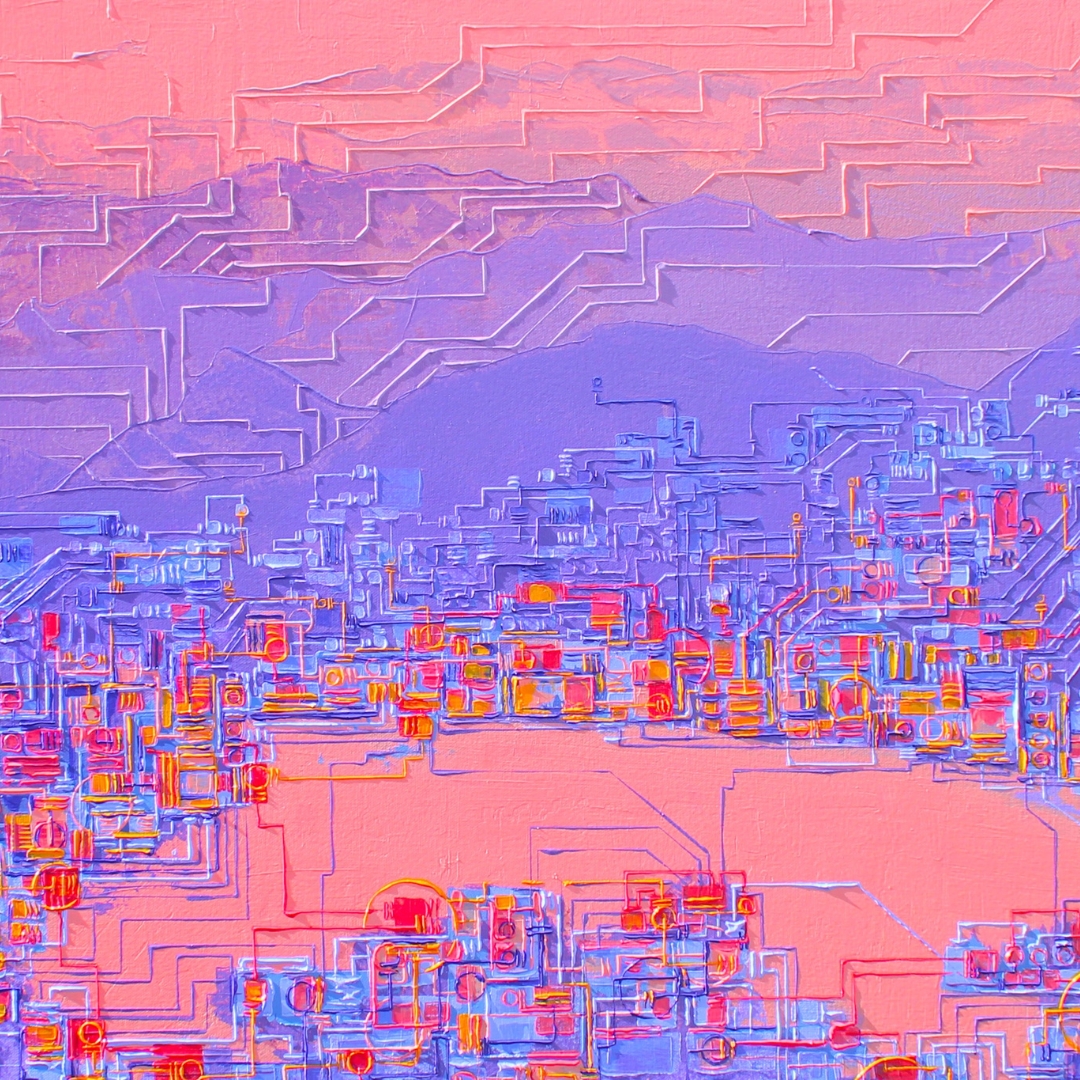
I‘d advise any artist to establish a routine that gets them into the studio every day. Even if you’re not ready to make the next move on one specific artwork, I’d recommend picking another task to get working in the studio, like: prepping canvases, reviewing notes from an idea journal or folder, cleaning brushes and tools, or color blocking for a new work. I have 2 or 3 works in progress all the time, so I’m always ready to move forward on one piece or another.
And, stay humble. There’s no linear path to success as an artist, and the pursuit of success will seem to loop, stall and circle back. The point, really, is to continue making art and to get better at it. We can set ourselves up for exorbitant stress (or, missed opportunities!) if our professional artistic goals are too narrowly defined.
I limit the amount I’m willing to invest marketing, competitions and exhibitions to less than 5% of my earnings. In fact, there are a lot of opportunities for exposure that don’t cost anything at all. Conversely, there are some very expensive print and art fair opportunities which likely won’t result in commensurate returns. Consider the value of your time and auxiliary costs, such as shipping and display equipment. For me, it’s most often more efficient business strategy to simply stay in the studio and produce more paintings. Then, I always have an abundance of works ready for engaged patrons and gallerists.
What piece of advice has helped you the most in your career?
As a teen in New York I worked for a ceramist who used to say that every good artwork has an ugly phase that needs to be worked through. I’ve found this to be true in many works. When my painting reaches a frustrating point, I may turn away from it overnight and work on another piece, but I always come right back to it. I trust the decision that I made to create the work still holds water, and sometimes I chew on ideas to redirect the piece to completion for a few days. Other times, I’ll push myself to make a bold move like rebuilding an entire section of the canvas, or using a wash or a glaze to correct the color scheme and completely remixing my palette. I believe pushing each painting to fruition has made me a better painter, honing and broadening my skills. Many of my best works have come through these phases.
Meet Our Members
Artist Breakthrough Moments | In Conversation with Vidushi Gupta
Artist Breakthrough Moments | In Conversation with Vidushi Gupta The...

Jaime Dominguez | January 2026, Member of the Month
An Interview with Jaime Dominguez: Visual Artist and Overall Winner...
Agnieszka Lokaj | December 2025, Member of the Month
An Interview with Agnieszka Lokaj: Visual Abstract Artist and...