An Interview with Jane Palm-Gold: Best Landscape Artist – VAA Artist of the Year 2025 and April Member of the Month
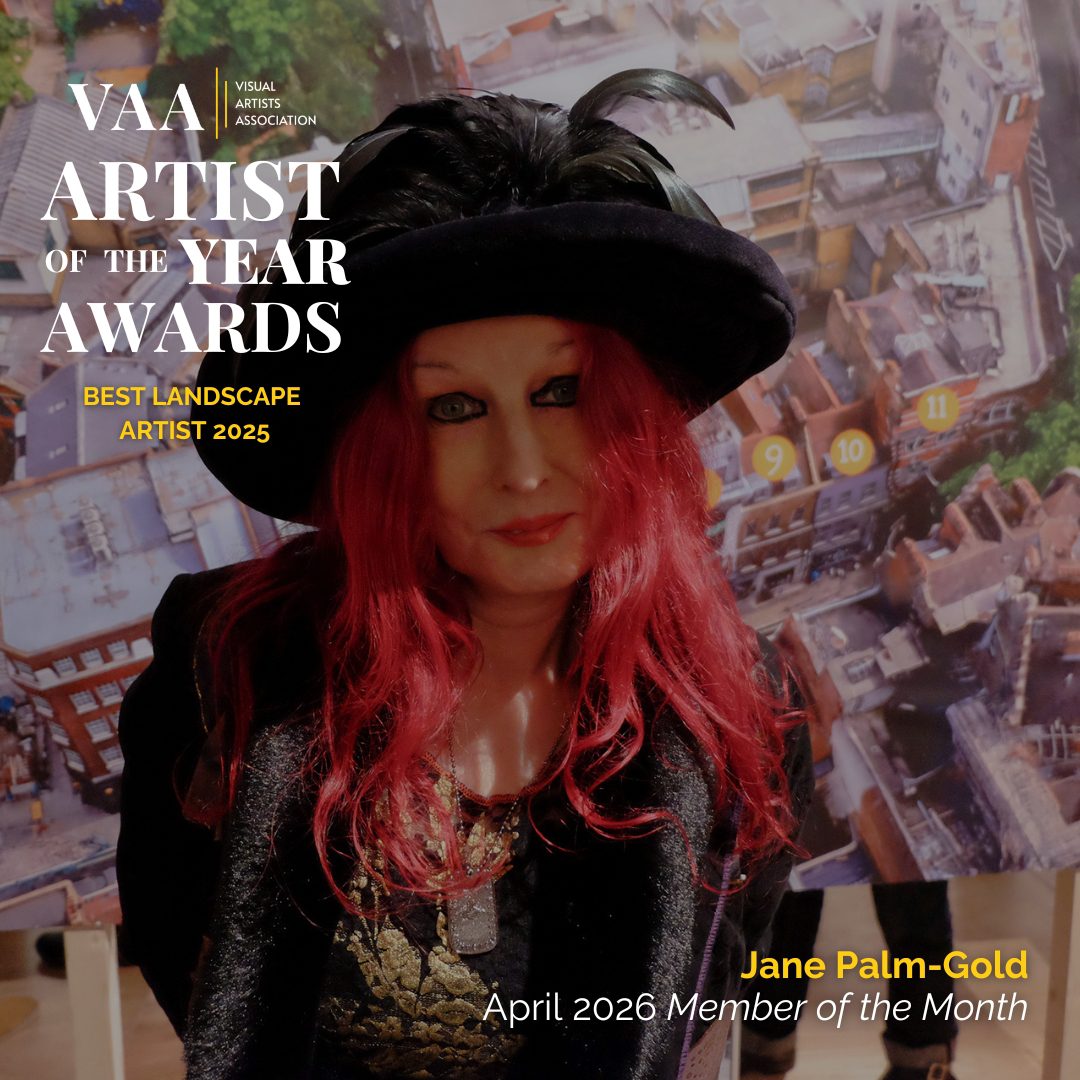
Jane Palm-Gold – Artist Feature – VAA Member of the Month April 2026
Jane Palm-Gold is a London-based visual artist working across drawing, animation, installation, and research-led exhibition practice. Jane grew up in Crawley – often feeling like she was living in some kind of dystopian nightmare, and where she felt completely at odds with the environment and people, however she got through it and ended up at Crawley College of Technology, completing a Foundation in Art and Design. She went on to train in Graphic Design at Liverpool Polytechnic throwing herself into her work, and at the end of her first year was told she could complete her degree in an area she wanted.
She was ‘head-hunted by Professor Ray Fields who led the animation/experimental film degree. Jane says she owes Ray everything – an extraordinary man and great artist. Following Ray’s approach to the medium – “seeing and drawing observations from life”, Jane made serious films that encouraged the audience to respond in a thinking manner. After graduating, she took a year to completely immerse herself in research about the destruction of the Amazon rainforests by Western Civilisation; creating a film “Changing World” that was featured at animation festivals in Europe and Glastonbury Festival for Greenpeace in 1999.
Having left the animation world and visiting the London Lighthouse for tea one day – having a profoundly moving experience, she wanted to do something to help and found herself working freelance in HIV/AIDS for 3 years doing public art exhibitions.
The first was funded by the Chrysalis AIDS Foundation, ‘Chances: An exhibition of Safer Sex’ was at the London Lighthouse (December 1990 – February 1991); she was then commissioned to do ‘Loving & Living’ by two AIDS charities, Positively Women and the Immune Development Trust. This was launched on International Women’s Day in 1993 at Smith’s Gallery, Covent Garden, then it went to the Body Positive National Network Conference in Durham (September, 1993) before she got a World AIDS Day grant to take it to Princess Diana’s Concert for Hope at Wembley Arena. This led her into healthcare illustration work until the health authorities lost all their budgets, so Jane then did a further MA in Interactive Multimedia at the RCA.
Her work explores psychogeography, social history, and cultural memory, with a particular focus on place and locality. Over the past two decades, her work has focused on the layered and often erased histories of central London, particularly St Giles, where she lives and works. Her exhibitions draw on archival research and site-specific investigation to examine themes of loss, and continuity.
Jane has no typical day, she creates exhibitions from extended periods of input and then output – reading, researching, gathering materials – and once she feels she has an angle to a painting derived from her enquiries, she begins the creative process. She also does public talks and TV appearances, alongside her exhibitions.
To learn more about her work, visit: www.janepalmgold.com
And follow her Instagram: @janepalmgold, @janepalmgoldart
“My process is like a production line, but each work I aim to be rich and potent in meaning due to the amount of research behind it. I take a lot of time crafting my works and curating my shows.”
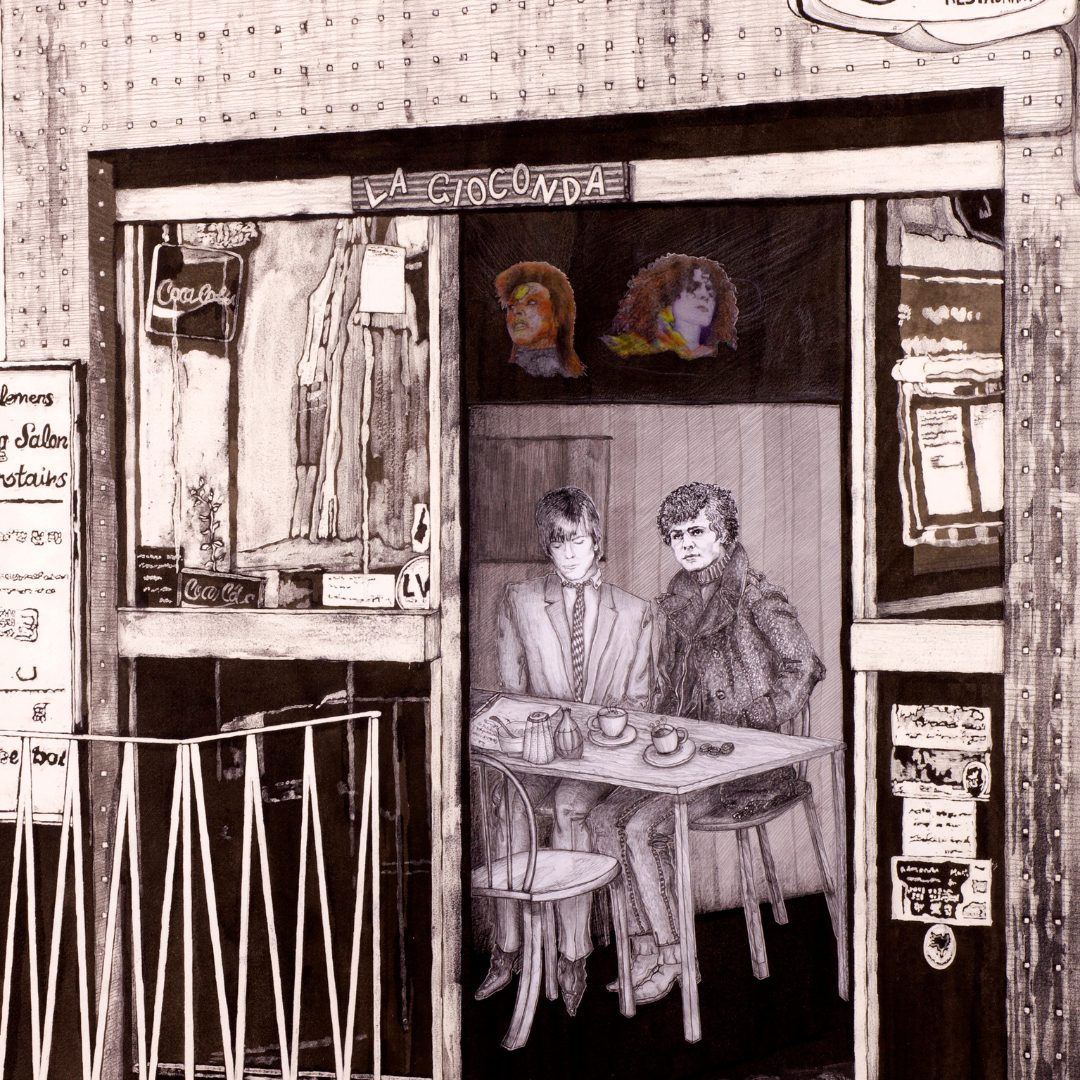
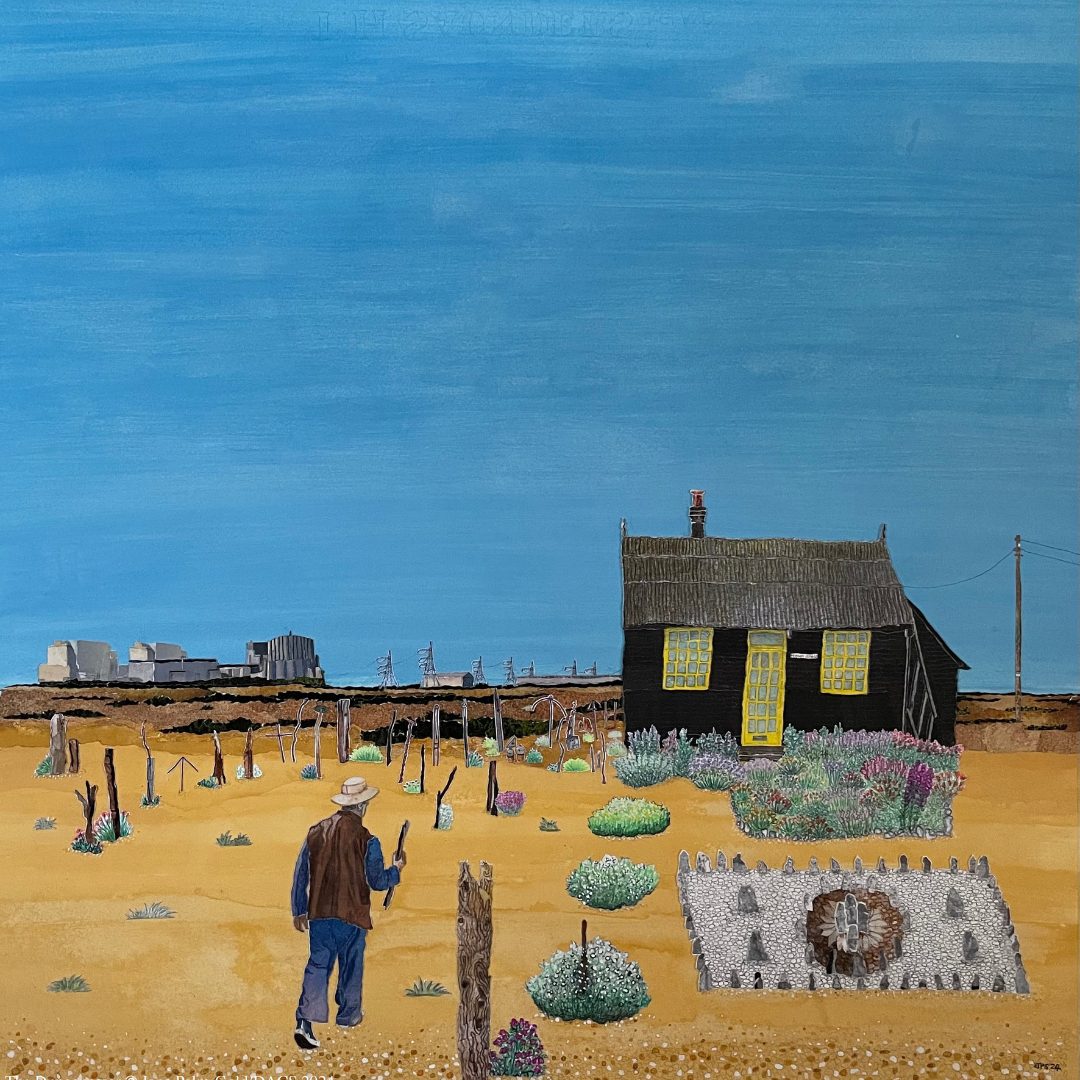
My shows are about sense of place, history and change but are rooted in observation and drawing life. The initial idea for my Jarman show came to me as I walked along the exterior landing inside Phoenix House (I’d been many times). Here was the largely unchanged view that Derek would have seen daily, with its sculptural chimneys, flying walkways, industrial pipes and projected aerial forms, all set against the St Giles sky. It struck me, I could’ve been looking at his created garden at Dungeness – there was a correlation between the two landscapes. The next stage was (as usual) a huge amount of reading and research in archives about his life there and at Prospect Cottage. I photographed both places, and Phoenix House, in particular, has now greatly changed inside. The paintings are inspired from diary entries from both ‘Smiling in Slow Motion’ and ‘Modern Nature’, from my photography and historic images. I conducted interviews with his friends and his producer, John Scarlet Davis, selected historical text from a few sources and photos by Derek Ridgers to accompany the paintings. The show was in two halves and it was an enquiry into his life at Phoenix House – why had he moved from here to the remotest Kent? I felt that there was a gap in knowledge about his life at Phoenix House and wanted to raise awareness about the need for a plaque for him on the Charing Cross Road.
I believe in lifelong learning and seek to enrich myself and my audience through education. My approach to my work was founded at Liverpool Polytechnic by Professor Ray Fields teaching. After first re-establishing the fundamentals of colour, form, space and movement (the latter because of animation), we were encouraged to observe life and draw everywhere. Ray guided each of us to make films about our interests and to encourage a thinking response in our audience. He instilled in me that enquiry and research which would give my works a solid foundation, giving them potency, depth and meaning.
What is your creative process? What outlook guides you?
What is your definition of artistic success?
I would say there are many levels and kinds of artistic success. In terms of my work and exhibitions; broad PR coverage, large audiences drawn to the show, and strong sales. I always aim to construct and create shows that are a coherent whole, and I curate these so that my audience is taken on a journey through space. Someone once said to me that I create in the abstract – that in my creation of my shows, I put myself into the role of the viewer to think about how my works or exhibition ideas and themes might be perceived. I definitely construct my shows with the aim of enabling a thinking response from my audience.
As I was an animation director, I suppose I apply ‘direction’ principles to the process of creating across time upon the gallery walls. I seek to make my exhibitions a learning experience for the viewer. The years of research I put into the creation of my shows is reflected in the mass of content I present – my paintings are given a contemporary context by the juxtaposition of accompanying historical prints and texts. I regard my exhibitions as educational. If someone comes away having learnt from the experience of taking in one of my shows, I regard that as an artistically successful outcome.
I think the key milestones in my career: ‘Changing World’ at Glastonbury for Greenpeace, ‘Loving & Living’ at Wembley Arena for Princess Diana’s Concert for Hope; ‘London’s Underworld Unearthed’ with MoLA which had national PR and radio and was a publicly and critically acclaimed exhibition. On launch day I was no.1 in the Top Five art shows on the front page of the Guardian. My Jarman show was very important too — extremely popular with audiences and packed out. With the appropriate backing, I would love to re-stage it at a museum.
In September 2024, my exhibition, ‘Derek Jarman: From Soho to the Fifth Continent’ opened at Sean McLusky’s Farsight Gallery in St Giles, before transferring to the Rye Arts Festival. I was interviewed for BBC Radio London’s Robert Elms Show and the exhibition secured widespread media coverage in London and the south-east. My associated talk, ‘Derek Jarman: From Phoenix House to Prospect Cottage’ sold out at Rye Arts Festival and Camden Archives. I was shortlisted for the VAA Visual Arts Open Art Educator category and won the Landscape category of the VAA Artist of the Year with ‘The Dungenesser’.
In October 2025, I re-staged my critically acclaimed exhibition ‘London’s Underworld Unearthed: The Secret Life of the Rookery’ (2011) as part of this year’s Bloomsbury Festival which was featured as part of the VAA’s OpenSpaces 2025 Global Art Trail.
What are some of the accomplishments you are most proud of? What are some of the highlights from the past 15 months?
What are the biggest obstacles you’ve faced when improving your arts profession? What’s the one piece of advice that has helped you the most?

Time and not being a limited company which would make fundraising a lot easier. I’ve had substantial funding for a few of my shows and I have a track record for delivery of projects on time and within budget. Funding has gotten scarce in recent years and the criteria for support has changed or narrowed. The Jarman exhibition was a challenge and yet Jarman’s stock is high and there is enormous public interest in him. Huge numbers of people came to see it at Farsight Gallery and especially at the Rye Arts Festival in September 2024. It was a really important exhibition as it highlighted his life at Phoenix House and then Dungeness.
Professor Ray Fields used to say that what he was giving us ‘would set us up for life’. He was a great artist and a pioneering educator. And a rebel. As an indication of this, the Senate of the Royal College of Art wanted to confer all sorts of accolades upon him over many years. He told them to piss off five times. Ray used words like mantras and we visually explored ‘sensation’, ‘seeing’ and ‘life’; he lived by the following, ‘Art explains, entertainment exploits (the thinking part of your brain)’. This statement forms the foundation to my work.
Formal acceptance of my work into local archives and national museums, like the Museum of London. My aim is to be commissioned to create a show for a public art space or museum and to work with their collections to incorporate works within my own show there. To work to produce books of my exhibitions — which after all took an enormous amount of research and work to achieve, over many years and which have furthered knowledge.
I have been a member of DACS since 1984, was a member of the AOI for a few years until my work became more aligned with being an artist. I have enjoyed being a Premium member of VAA and immensely benefitted from all the online advice and tutorial sessions and courses that the VAA provide. Their guidance has been invaluable and I have felt supported by the organisation, which I’m immensely grateful for. I cannot recommend the VAA highly enough — I have gained much from being a member. They support artists careers like no other organisation I have come across.
What Career Goal is your current priority? How has the VAA helped your journey so far?
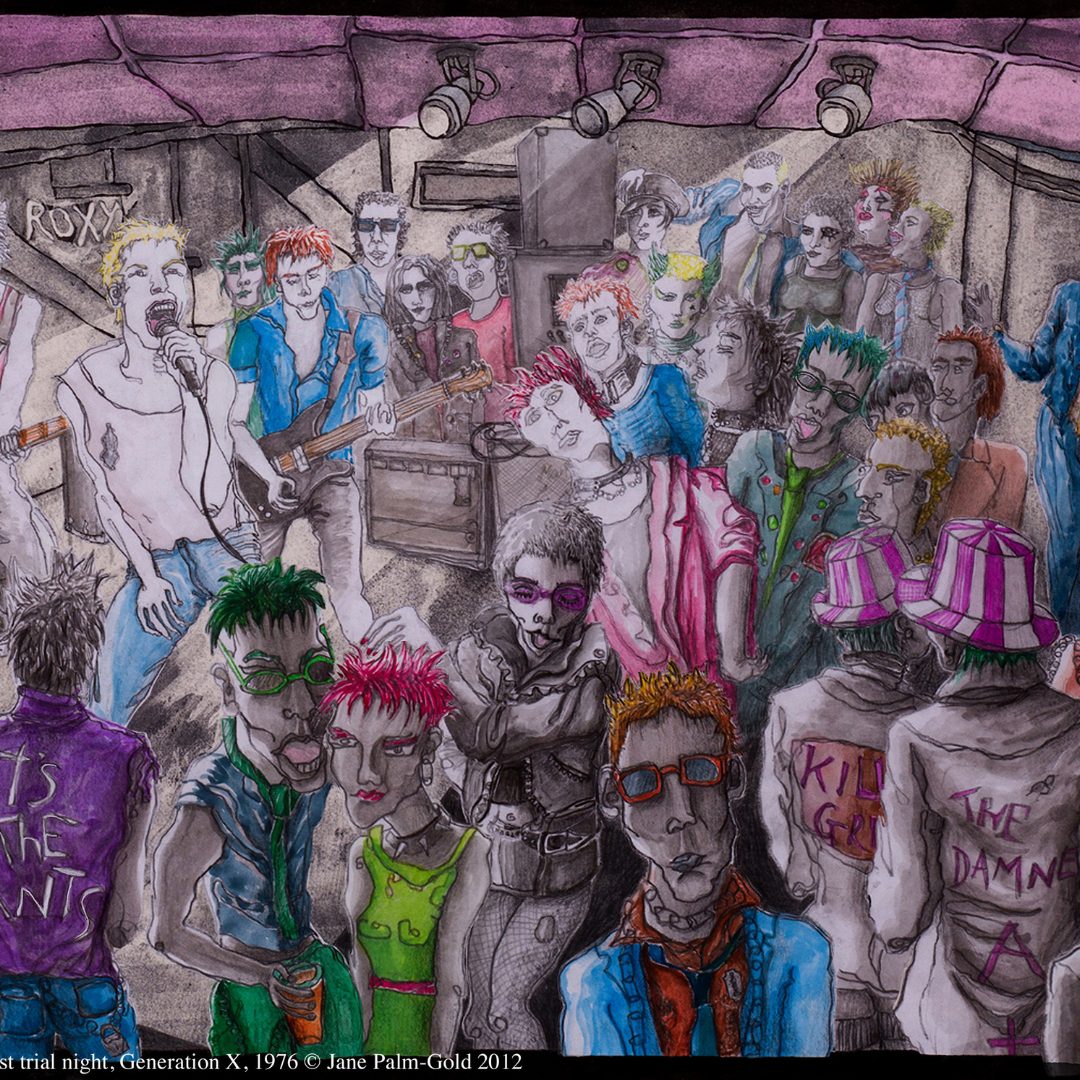
Is there anything you would like to say to the artist you were a year ago?
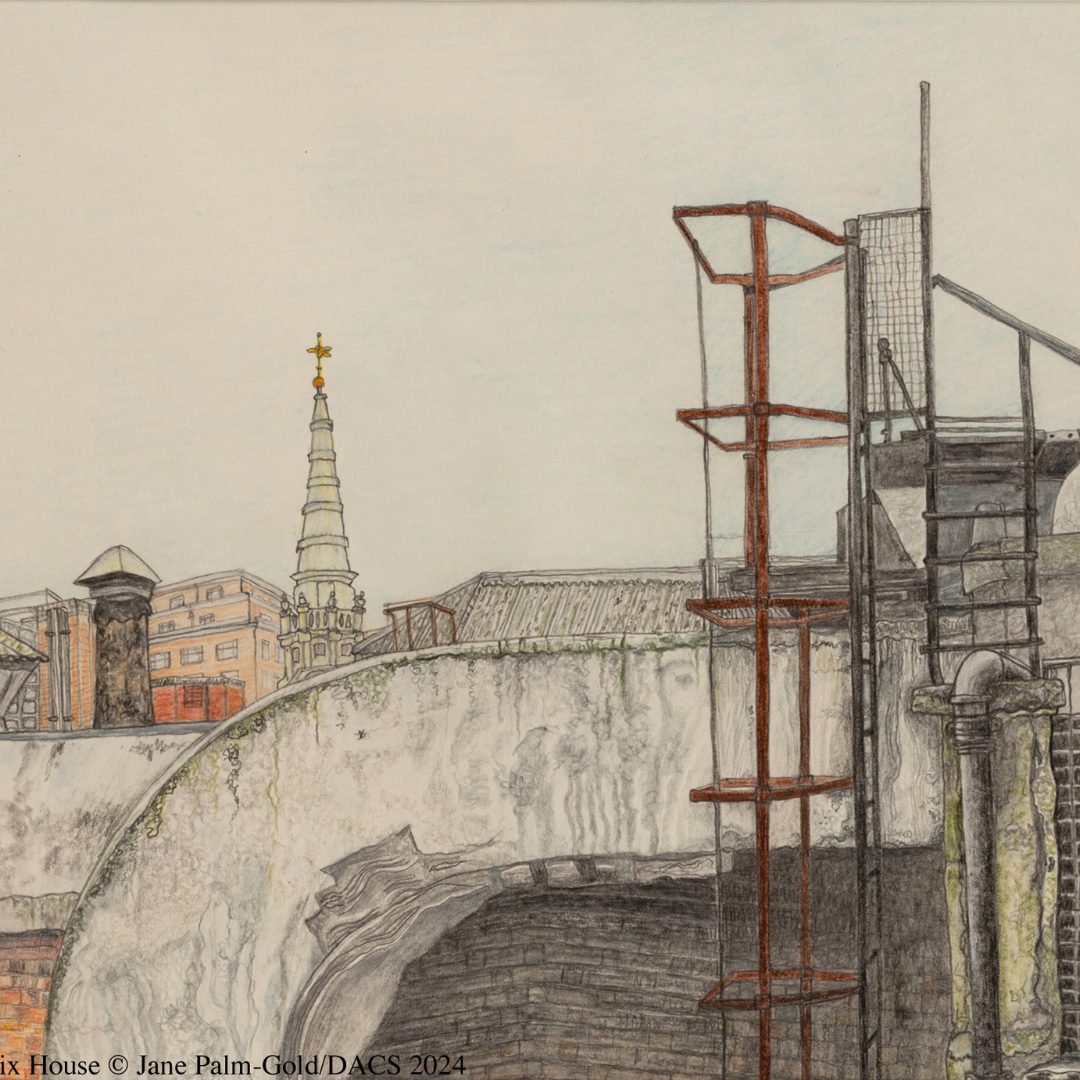
Enter competitions (which I never do). You have to be in it to win it!
Meet Our Members
Trevor Burgess | February 2026, Member of the Month
An Interview with Trevor Burgess: Best International Artist for VAA...
Artist Breakthrough Moments | In Conversation with Vidushi Gupta
Artist Breakthrough Moments | In Conversation with Vidushi Gupta The...

Dmitriy Grechko – Wall of Success
Dmitriy Grechko - Wall of SuccessBorn in 1985 in the Ukrainian SSR,...